
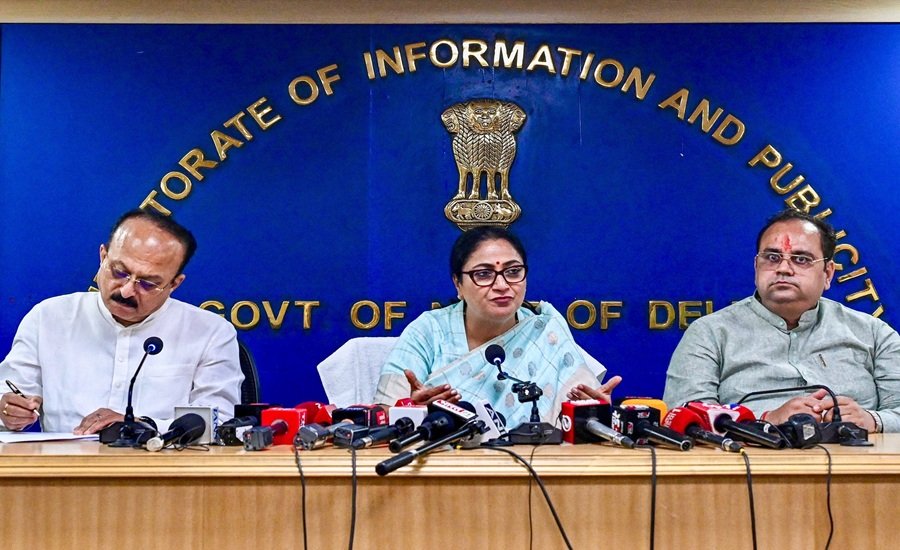
The Delhi government notified its new electric vehicle policy on June 29, 2026, making clear that hybrids won’t get a rupee of subsidy, the focus is exclusively on EVs. Chief Minister Rekha Gupta announced that the Cabinet had approved the policy with a ₹7,000 crore budget and a total investment of ₹15,000 crore, covering charging infrastructure, purchase incentives, and scrapping incentives. Gupta described the policy as “transformative and revolutionary,” saying the shift to electric vehicles would be a key weapon in fighting air pollution in the city. The policy is expected to kick in on July 1, 2026, and will run through March 31, 2030.
Deadlines by vehicle category
The policy sets hard timelines for different categories of vehicles to make the switch. From January 1, 2027, only electric three-wheelers and N1 trucks will be registered in the capital. Two-wheelers follow from April 1, 2028, when only electric variants can be registered. School buses will need to convert at least 10 per cent of their fleet to electric within two years of the policy’s notification. Vehicles already registered and running on fossil fuels will be allowed to complete their full lifecycle.
Transport Secretary Niharika Rai explained what’s driving the focus. “The policy focuses on these vehicles specifically. We are trying to convert the entire fleet of these vehicles into EV,” she said, noting that commercial goods carrier vehicles account for 33 per cent of air pollution in the city, while two- and three-wheelers contribute 46 per cent.
Budget breakdown and revenue impact
Of the ₹7,000 crore government allocation, ₹3,000 crore has been set aside as purchase and scrapping incentives, and ₹1,000 crore specifically for developing charging infrastructure across the city. On top of that, all EV buyers will be exempt from road tax, and registration fees will be waived, though officials noted that the road tax and registration fee exemption applies only to cars priced up to ₹30 lakh at ex-showroom price. These benefits are expected to cost the government around ₹3,000 crore in foregone revenue.
The transport department will be the nodal agency overseeing implementation. Delhi Transco Ltd. (DTL) will be responsible for building out charging infrastructure, working alongside the power department and distribution companies to ensure the grid can support the EV rollout.
Purchase incentives: what buyers get
Purchase incentives will taper each year. For two-wheelers, buyers get ₹30,000 in the first year, ₹20,000 in the second, and ₹10,000 in the third. Three-wheelers are eligible for ₹50,000, ₹40,000, and ₹30,000 in the first, second, and third years respectively. N1 commercial trucks can get up to ₹1 lakh in subsidy in the first year of the policy. Electric N2 trucks, those hauling loads between 3.5 and 12 tonnes, will be exempt from ‘No Entry’ timing restrictions for the next ten years. That benefit, however, applies only to the first 1,000 N2 trucks purchased within three months of the policy notification.
Owners scrapping vehicles that fall below BS-IV emission norms will receive ₹10,000 for two-wheelers, ₹25,000 for three-wheelers, and ₹1 lakh for four-wheelers. Scrapping an N1 truck fetches ₹50,000, while Gramin Seva units that complete their lifecycle in the coming years will be eligible for a ₹15,000 subsidy.
How to claim subsidies
A dedicated EV portal will track all purchased and registered vehicles. To claim subsidies or incentives, consumers will need to submit their documents through the portal within 30 days of receiving their registration certificate. Payments will go out within 60 days via Direct Benefit Transfer (DBT). The government also plans to install 32,000 charging points over the next four years, funded through a combination of PM e-Drive scheme money and the Delhi government budget.
Key Takeaway: The Delhi EV Policy, effective from July 1, 2026 until March 31, 2030, allocates ₹7,000 crore with a total investment of ₹15,000 crore to promote electric vehicles through purchase incentives, scrapping incentives and charging infrastructure, while excluding hybrid vehicles from subsidies. The policy also lays down phased timelines for the transition of different vehicle categories to electric mobility and aims to reduce air pollution in the national capital.
M.C.Q.
Question 1: Under the Delhi EV Policy 2026, which of the following vehicles will be eligible for government purchase subsidies?
- A. Hybrid vehicles only
- B. Electric vehicles only
- C. CNG vehicles only
- D. Both hybrid and electric vehicles
Question 2: The Delhi EV Policy 2026 is scheduled to remain in force until:
- A. March 31, 2028
- B. March 31, 2029
- C. March 31, 2030
- D. December 31, 2030
Read More: Karnataka Open to Strong Talks with Tamil Nadu on Mekedatu Project, Says Minister Ramalinga Reddy