
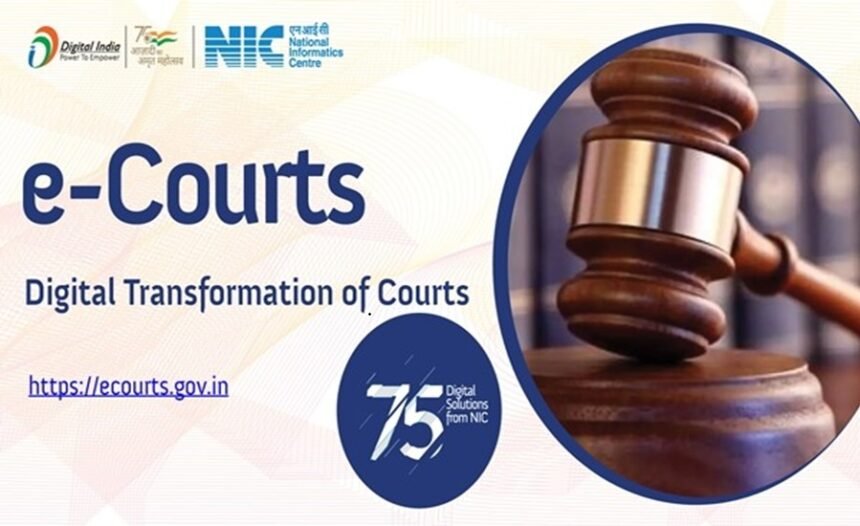
The e-Courts Mission Mode Project has been rolling out across the country in phases, with one goal: put ICT to serious use inside the judicial system. Phase I (2011–2015) started with the basics: computerising 14,249 courts and installing Local Area Networks in 13,683 of them. Phase II (2015–2023) went further, adding citizen-facing digital services: the National Judicial Data Grid, e-filing, e-payments, Wide Area Network connectivity, e-Sewa Kendras, and upgraded Case Information Systems. The project is now in Phase III (2023–2027), pushing harder on digital access, transparency, and efficiency.
Digital access, virtual hearings, paperless courts
Phase III has moved quickly on several fronts. As of 31 January 2026, over 660.36 crore pages of court records including legacy material have been digitised for secure storage and faster retrieval. Thirty Virtual Courts are now handling online adjudication of traffic challans; they’ve received 10.13 crore challans, disposed of 9.05 crore, and collected ₹1,002.73 crore in revenue from payments on 97.72 lakh challans.
Video conferencing rules are in place across all High Courts and District Courts. Facilities have been extended to 3,240 court complexes and 1,272 jails, enabling over 3.97 crore hearings involving undertrials, witnesses and lawyers. Live streaming of court proceedings is running in 11 High Courts. The e-filing platform has seen roughly 1.07 crore cases filed online; the e-payment system has processed ₹1,404 crore in court fees and ₹75 crore in fines.
The National Judicial Data Grid has been upgraded with better dashboards and continues to give the public access to court statistics and case data, while helping track and reduce pendency. Case Information System 4.0 is now live in all courts, with stronger usability, privacy features, and integration across NJDG, e-filing, Virtual Courts, and the Interoperable Criminal Justice System. The S3WaaS platform currently hosts 730 District Court websites.
Citizen-facing services have scaled considerably. Over 4 lakh SMS updates and 6 lakh email notifications go out daily to litigants and lawyers. The multilingual e-Courts Services Portal draws nearly 35 lakh visits a day. The e-Courts mobile app has been downloaded 3.59 crore times; the JustIS application for judicial management has 22,133 downloads. Across the country, 48 e-Sewa Kendras are operational in High Courts and 2,396 in District Courts.
The NSTEP system has processed 7.29 crore electronic summons and notices, with 2.11 crore delivered via mobile-based and GPS-enabled mechanisms. Digital Courts 2.1 has added paperless court functionality with AI-enabled translation and transcription, letting judges access case documents, pleadings and evidence digitally.
Key takeaway: Across three phases, the e-Courts project has pushed India’s judiciary steadily toward digital operation: e-filing, virtual courts, video conferencing, and mass digitisation of records. The aim of integrating AI and connected platforms is to process cases faster, greater transparency, and more accessible justice delivery for citizens.
MCQ:
Question 1:
The National Judicial Data Grid (NJDG) is primarily associated with:
A. Election management
B. Judicial data and case statistics
C. Digital land records
D. Police modernization
Question 2:
Which phase of the e-Courts Mission Mode Project focuses on AI-enabled paperless courts and enhanced digital access?
A. Phase I (2011–2015)
B. Phase II (2015–2023)
C. Phase III (2023–2027)
D. Pilot Phase
Read more: PM GatiShakti National Master Plan: Key Features, Infrastructure Projects, Funding and Significance