



Launched in October 2021, The PM GatiShakti National Master Plan has become the country’s main framework for planning infrastructure. At its helm the Network Planning Group (NPG), is evaluating major central government infrastructure projects before they’re sanctioned. It mainly checks for multimodal connectivity, last-mile access, and data-backed decision-making at the design stage itself. As of February 2026, the NPG has evaluated 352 projects with a combined estimated cost of ₹16.10 lakh crore. Of those, 201 have been sanctioned and 167 are currently under implementation.
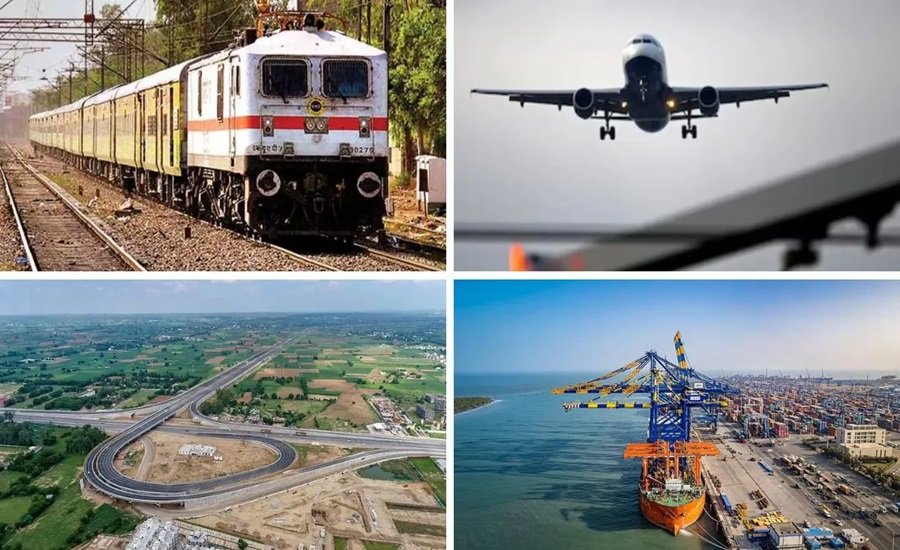
Coordinated planning across sectors
PM Gati Shakti cut across roads, railways, urban development, ports, aviation, renewable energy, textiles, and digital infrastructure. The Ministry of Road Transport and Highways leads with 164 evaluated projects; the Ministry of Railways follows with 137. Between them, these two sectors account for the bulk of planned investment.
At the state level, the Ministry of Finance put ₹5,000 crore on the table under Part-II of the Scheme for Special Assistance to States for Capital Investment in 2022–23, structured as 50-year interest-free loans for projects aligned with PM GatiShakti objectives. Of that, ₹4,764.53 crore was approved across 178 state projects. Uttar Pradesh received the largest allocation at ₹896.91 crore, followed by Bihar at ₹502.92 crore and Madhya Pradesh at ₹393 crore.
Implementation is tracked through two parallel systems. MoSPI monitors projects costing ₹150 crore and above through the PAIMANA portal, which publishes status reports, progress updates, and cost overrun data. For larger projects of ₹500 crore and above the Project Monitoring Group runs a milestone-based system with a five-tier escalation framework designed to clear bottlenecks faster.
Key takeaway: PM GatiShakti has established itself as the coordinating spine of India’s infrastructure planning. The objective is faster delivery and fewer failures in planning which has historically slowed down large infrastructure programmes.
MCQ Questions:
Question 1:
PM GatiShakti National Master Plan was launched in:
A. October 2019
B. August 2020
C. October 2021
D. January 2022
Question 2:
What is the primary role of the Network Planning Group (NPG) under PM GatiShakti?
A. Financing infrastructure projects
B. Evaluating infrastructure projects for integrated planning and connectivity
C. Acquiring land for infrastructure projects
D. Conducting environmental clearances