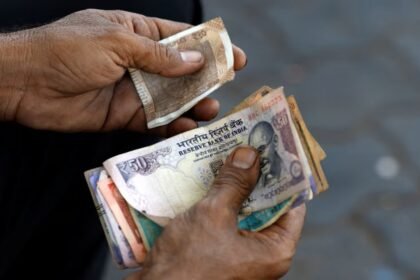

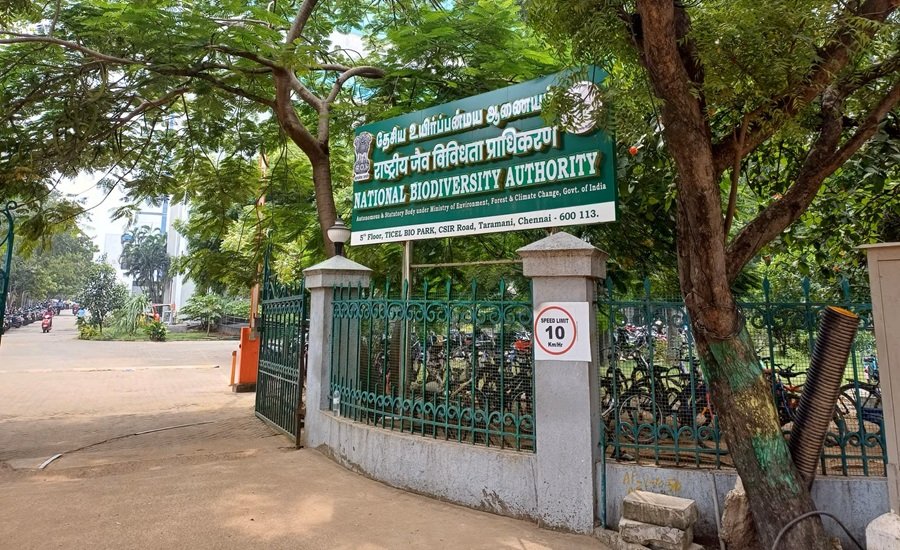
India’s Access and Benefit Sharing (ABS) framework under the Biological Diversity Act, 2002 has mobilized more than ₹266 crore in benefit sharing and disbursed around ₹145 crore to beneficiaries so far, making a concrete case for the country’s approach to ensuring that the gains from using biological resources and associated knowledge are shared fairly. The National Biodiversity Authority (NBA) has collected over ₹266 crore through the ABS mechanism since 2008, including ₹21.26 crore during FY 2025-26.
With average annual collections of ₹14.75 crore, the steady upward trend in receipts reflects growing industry participation and compliance, and points to the success of India’s ABS regime in channelling money from the commercial use of biological resources back toward conservation and local communities.
Who receives the benefits
Under the Biological Diversity Act, 2002, benefits from the use of biological resources flow to local communities, Biodiversity Management Committees (BMCs), farmers, traditional knowledge holders, and other custodians of biodiversity. Since the ABS framework became operational, the NBA has paid out around ₹145 crore in benefit-sharing payments, ₹78 crore of that in FY 2025-26 alone. Those payments have reached more than 10,500 Biodiversity Management Committees across 23 states and four union territories, over 230 farmers, six state forest departments, and various institutions. The framework has also funded six Red Sanders research projects.
The underlying logic of ABS is to ensure that whoever uses biological resources or traditional knowledge pays something back to the communities that have stewarded those resources. By tying biodiversity use to community benefits, the mechanism is designed to encourage conservation, sustainable use, and livelihood improvement at the grassroots level. Resources flowing through the mechanism include Red Sanders, medicinal and aromatic plants, seeds, livestock genetic resources, crude herbs, biochemical components, and microorganisms.
Which sectors are driving collections
Red Sanders (Pterocarpus santalinus) accounts for the biggest share of ABS realisations at ₹120 crore, or 45 per cent of the total. Seeds come second at ₹84.61 crore (32.3 per cent), followed by the pharmaceuticals and AYUSH sector at ₹36.61 crore (13.8 per cent). These three sectors together make up nearly 91 per cent of total ABS collected.
Major contributors include Pioneer Overseas Corporation, Nunhems India Pvt. Ltd., East-West Seeds India Pvt. Ltd., Savannah Seeds, TATA Chemicals, Syngenta, Himalaya Wellness Company, Dabur India Ltd., Organic India Pvt. Ltd., Laurus Labs Ltd., Amway India Enterprises Pvt. Ltd., Synergia Life Sciences Pvt. Ltd., Novozymes South Asia Pvt. Ltd., Akay Natural Ingredients Pvt. Ltd., Valagro Bio-Sciences Pvt. Ltd., L’Oréal India Pvt., Advanced Enzymes Pvt. Ltd., Indian Oil Corporation Ltd., SILAB S.A., BASF Beauty Care Solutions France S.A.S., and Tamam Corporation.
How the money gets used on the ground
Under the Biological Diversity Rules, 2024, the NBA transfers 85 to 90 per cent of the ABS amount to the relevant State Biodiversity Boards, which then pass it on to beneficiaries. At the local level, those funds are going toward biodiversity conservation and habitat restoration, documentation and updating of People’s Biodiversity Registers, recording of traditional knowledge, setting up medicinal plant parks and community gene banks, capacity-building programmes, and sustainable livelihood initiatives for rural and tribal communities, investments that are both strengthening conservation on the ground and creating real socio-economic gains for local people.
India’s ABS framework as a global model
By directing resources toward conservation and making sure benefits reach the communities closest to the land, India’s ABS framework is advancing the objectives of the Nagoya Protocol, supporting the National Biodiversity Strategy and Action Plan (NBSAP) 2024-2030, and contributing to the Kunming-Montreal Global Biodiversity Framework, specifically Target 13 on fair and equitable benefit sharing.
The framework also connects to Sustainable Development Goals on poverty reduction, decent work and economic growth, responsible consumption and production, climate action, and life on land. With over ₹266 crore mobilized and around ₹145 crore already in the hands of beneficiaries, India’s ABS framework has built a reputation as a workable global model for turning biodiversity conservation into something that tangibly improves lives.
Key Takeaway: With over ₹266 crore mobilised and around ₹145 crore already in the hands of beneficiaries, India’s Access and Benefit Sharing (ABS) framework has built a reputation as a workable global model for turning biodiversity conservation into something that tangibly improves lives, while ensuring that benefits from the use of biological resources and associated knowledge are shared fairly with local communities and other custodians of biodiversity.
M.C.Q.
Question 1: India’s Access and Benefit Sharing (ABS) framework functions under which legislation?
- A. Environment (Protection) Act, 1986
- B. Wildlife (Protection) Act, 1972
- C. Biological Diversity Act, 2002
- D. Forest (Conservation) Act, 1980
Question 2: The Nagoya Protocol is primarily associated with:
- A. Conservation of migratory species
- B. Fair and equitable sharing of benefits arising from the utilization of genetic resources
- C. Regulation of hazardous waste movement
- D. Protection of wetlands of international importance
Read More: India, EU Strongly Reaffirm Cooperation on Sustainable Ship Recycling