
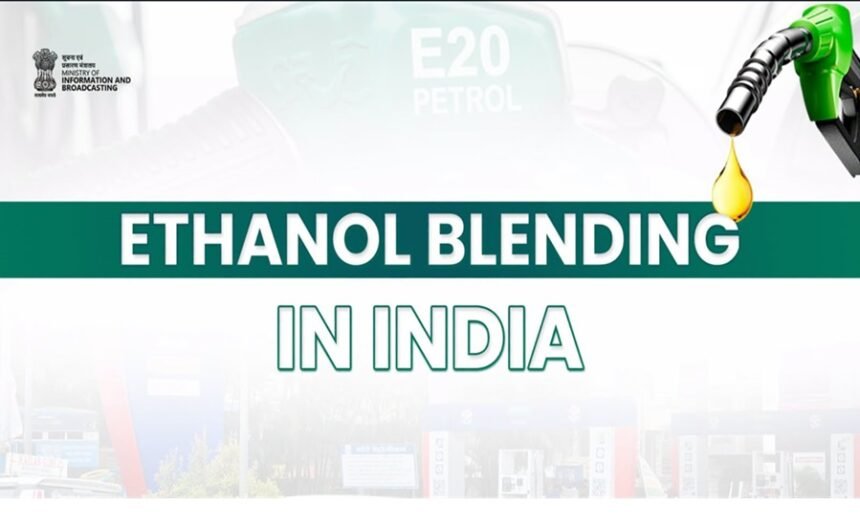
India hit its 20% ethanol-blending target five years early, and the government is using the moment to knock down a pile of rumors that have been circulating about E20 fuel.
Ethanol blending was under 1.5% back in 2013–14. By 2025–26 it’s at 20%. Procurement climbed from roughly 38 crore litres in ESY 2013–14 to a projected 1,200 crore litres this year, and production capacity grew from 421 crore litres in 2014 to nearly 2,000 crore litres now.
The motivation is straightforward: India imports about 88.5% of its crude oil, so blending in ethanol made from sugarcane, maize, and surplus rice cuts that dependence while giving farmers another buyer for their crops. Since ESY 2014–15 (through May 2026), the programme has saved more than ₹1.90 lakh crore in foreign exchange, replaced over 310 lakh metric tonnes of crude oil, cut roughly 930 lakh metric tonnes of CO2 emissions, and put more than ₹1.60 lakh crore into farmers’ pockets.
Sorting out the E20 rumors
A few claims have followed E20 around since launch, and the government has pushed back on each one.
The one about mileage dropping 30% comes from a real number, just misapplied: that’s ethanol’s lower calorific value versus petrol, not the mileage hit. Real-world mileage depends on how you drive, how well you maintain the car, tyre pressure, whether the AC is running. The actual difference is much smaller. Maruti Suzuki backed this up with service data: even in a car doing 20 km/l, the drop averages around 0.6 km/l, and better combustion and lower emissions largely offset it.
Engine damage is the other big worry, and the government says there’s no pattern of E20-linked failures showing up since rollout. The fuel went through testing by SIAM, ARAI, IOCL, and the manufacturers themselves before it hit pumps. Maruti Suzuki serviced 2.84 crore vehicles in FY 2025–26 over 1.5 crore of them not originally built for E20 and found no E20-related damage. Hero MotoCorp’s service data tells the same story. Toyota Kirloskar pointed out that ethanol fuel has been used globally for decades, and India’s rollout included testing on older vehicles specifically.
There’s also a chemistry reason ethanol helps rather than hurts: it’s a high-octane fuel, with a research octane number around 108.5 against petrol’s 84.4. Blended in, it pushes Indian petrol’s effective octane up to about 95, which means smoother combustion and lower emissions in vehicles built for E20.
On warranties and insurance: using spec-compliant E20 doesn’t void either, according to both insurers and manufacturers.
The sugarcane-juice-in-petrol claim making the rounds on social media is also wrong. Ethanol for blending goes through industrial fermentation and distillation and has to meet fuel quality standards before it’s blended. In addition, fuel ethanol doesn’t contain residual sugar, so the ants-are-attracted-to-it theory doesn’t hold up either. Modern vehicles are built to keep water out of the tank, so ethanol’s water-absorbing tendency isn’t the threat some posts suggest.
Two more details worth noting: ethanol plants now use just 3–5 litres of processed water per litre of ethanol produced, many running Zero Liquid Discharge systems, and only rice surplus to national food security needs goes toward ethanol production.
Key Takeaway: The US runs E10 nationwide with E15 growing, and flex-fuel vehicles there can handle up to E85. Brazil’s already at E27 and aiming for 35%, with most new cars sold as flex-fuel. Japan is phasing in E10, and Canada, Thailand, and parts of Europe have their own ethanol blending policies. Engineers India Limited summed up the government’s position: the programme rests on testing and compliance with BIS fuel standards and BS-VI emission norms, not just optimism.
MCQ:
Question 1:
India achieved the target of 20% ethanol blending in petrol in:
A. 2023-24
B. 2024-25
C. 2025-26
D. 2026-27
Question 2:
The primary objective of India’s Ethanol Blended Petrol Programme is to:
A. Promote electric vehicle adoption
B. Increase petrol exports
C. Reduce crude oil import dependence
D. Increase GST revenues from petroleum products