
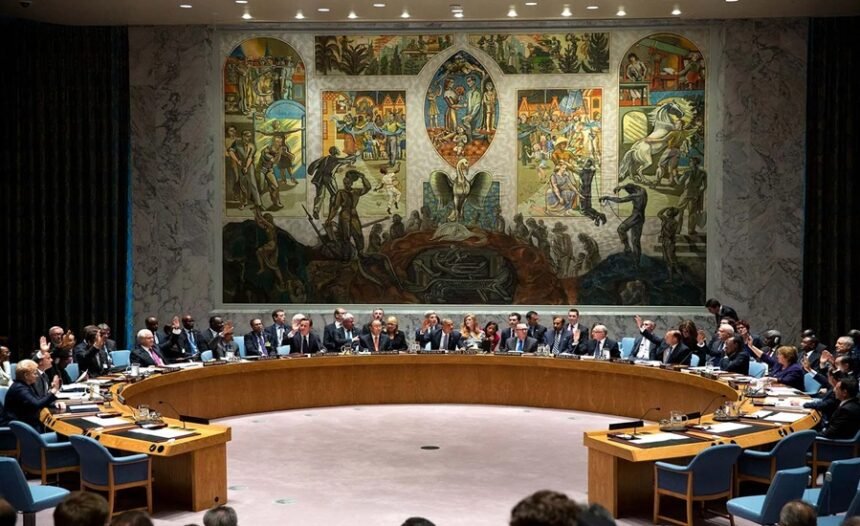
India will officially launch its campaign for a non-permanent seat at the UN Security Council (UNSC) for 2028-29 on July 13. According to a press note from the Ministry of External Affairs, External Affairs Minister S. Jaishankar will make the launch. He’s currently travelling through the Gulf region and will reach New York on July 10 for the official ceremony, one that carries real weight for India’s leadership standing in the Global South.
A Bid Amid Global Turbulence
The timing isn’t easy. This bid for the non-permanent UNSC seat comes as the world deals with several disruptive events, including the Gulf crisis following the U.S.-Israel war on Iran, which has thrown off energy and fertilizer trade with much of the world, the Global South included.
India will also need serious diplomatic effort here, since Tajikistan is the other candidate in the running for the seat reserved for the Asia-Pacific region. India has already picked up support from countries like Fiji, the United States, Austria and Sri Lanka, but there’s still a lot of ground to cover. Tajikistan has already locked in support from the OIC bloc, which counts 57 UN member-states. On top of that, both India and Tajikistan are SCO members, and the next SCO summit will be held in Kyrgyzstan, giving that meeting extra weight for both countries’ UNSC ambitions.
An Evolving Equation at the UN
Jaishankar has been travelling to multiple countries over the past few months with an eye on how the UN equation is shifting ahead of India’s 2028-29 UNSC bid. This week alone takes him to Bahrain, Kuwait and Oman, following a weekend visit to Qatar. He’ll head to New York next for extensive talks with India’s partners at the UN.
India has been pushing for UNSC reform and positioning itself as a champion for the Global South, but recent developments haven’t exactly gone to plan. Back in May, India postponed the India-Africa Forum Summit, which was scheduled for May 28-31, citing the Ebola outbreak affecting multiple African countries.
Diplomacy in Overdrive
Against that backdrop, India has stepped up consultations, visible in Jaishankar’s packed travel schedule, which recently included outreach to the Caribbean region.
The UN’s political season has been heating up ahead of the upcoming General Assembly, following the June 2026 contest where Kyrgyzstan beat the Philippines for the 2027-28 UNSC stint, winning support from 142 UN members against 49 for the Philippines. This will mark Kyrgyzstan’s first time on the UNSC since it joined the UN in 1992, after the dissolution of the USSR. Contests like these at the UNSC also reflect the shifting global dynamics shaped by the conflicts in West Asia and the ongoing Ukraine crisis.
Key Takeaway: India’s campaign for a non-permanent seat on the UN Security Council (UNSC) for the 2028–29 term reflects its continued efforts to strengthen its global diplomatic influence and advocate for the interests of the Global South amid an increasingly complex geopolitical environment.
The key points include External Affairs Minister S. Jaishankar’s launch of the campaign, India’s competition with Tajikistan for the Asia-Pacific seat, the importance of securing support from UN member states, and the broader context of UNSC elections, UN reforms, the Global South, the Organisation of Islamic Cooperation (OIC), the Shanghai Cooperation Organisation (SCO), and the UN General Assembly. The development also highlights how evolving global conflicts and diplomatic alignments influence multilateral institutions, making India’s UNSC bid an important topic from the perspective of international relations and India’s foreign policy.
M.C.Q.
Question 1: India has launched its campaign for election as a non-permanent member of the United Nations Security Council (UNSC) for which term?
- A. 2026–27
- B. 2027–28
- C. 2028–29
- D. 2029–30
Question 2: The non-permanent members of the United Nations Security Council (UNSC) are elected by the:
- A. UN Security Council
- B. UN Economic and Social Council
- C. UN Secretariat
- D. United Nations General Assembly
Read More: BHAVYA Industrial Parks Scheme: India’s Bright & Emerging Export Push