
Women’s safety, security, rehabilitation and empowerment sit at the top of the government’s priority list. The approach isn’t a single scheme but a multi-pronged one, built to support women at every stage of life, educationally, socially, economically and politically, so they can stand as equal partners in the country’s development. This idea of ‘women-led development’ isn’t incidental either. It’s treated as a core piece of the larger goal of a developed India, or ‘Viksit Bharat’, by 2047.
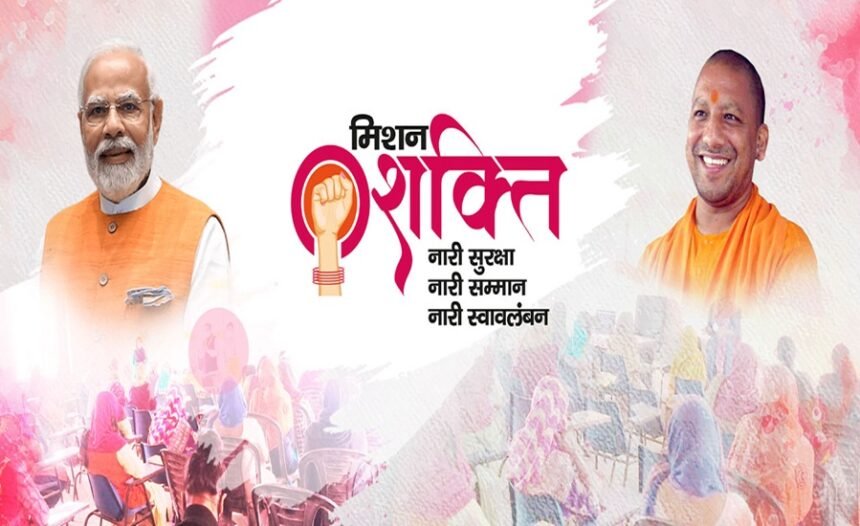
Mission Shakti drives this effort forward, working through two verticals: ‘Sambal’, focused on safety and security, and ‘Samarthya’, focused on empowerment.
One Stop Centres Bring Support Under a Single Roof
One Stop Centres, or OSCs, fall under the Sambal vertical of Mission Shakti. The idea is simple: a woman facing violence or distress, whether at home or in public, shouldn’t have to run between different offices for help. An OSC brings medical aid, legal advice, temporary shelter, police assistance and psycho-social counselling together in one place.
Since the scheme launched on 1 April 2015 through 30 June 2026, 991 OSCs have opened across the country, and they’ve assisted more than 15.20 lakh women in that time. Madhya Pradesh alone now has 63 operational OSCs, including one each in Narmadapuram, Narsinghpur and Raisen within the Hoshangabad-Narsinghpur Parliamentary Constituency, and the state has seen over 1.65 lakh women assisted since the programme began.
Women Helpline 181 Handles Both Emergencies and Everyday Support
Also under Sambal is the Women Helpline, number 181, a toll-free line running around the clock for both emergency and non-emergency situations. From its inception through 30 June 2026, it has helped more than 1.04 crore women nationwide, with 3.83 lakh of those cases coming from Madhya Pradesh.
These systems don’t work in isolation either. To make sure women actually reach the right service quickly, 661 OSCs have now been linked directly with the Women Helpline, allowing for faster, better-coordinated referrals. The Women Helpline itself is further connected to the Emergency Response Support System (ERSS-112), the Child Helpline (1098), and other relevant mechanisms, so that emergency response and coordination between agencies happen without delay.
OSCs also connect to Shakti Sadan, which handles cases where women need longer-term institutional support or safe accommodation, rounding out a full continuum of care under Mission Shakti.
How Mission Shakti Is Run and Monitored
Mission Shakti operates as a Centrally Sponsored Scheme, meaning the actual implementation falls to State Governments and Union Territory administrations, while adequate staffing and infrastructure support ensure it runs smoothly on the ground. Oversight happens at multiple levels. Once a year, the Programme Approval Board reviews progress with the States and UTs, checking on how well objectives are being met and how effectively services reach women and children.
Beyond that annual review, Ministry officials keep tabs through regular meetings, video conferences and field visits. A Mission Shakti Dashboard now also gives real-time visibility into how these schemes are functioning at the district, state and national levels.
Mission Vatsalya Extends Protection to Children in Difficult Circumstances
The Ministry of Women and Child Development is also the nodal body for the Juvenile Justice (Care and Protection of Children) Act, 2015, the primary law protecting children’s safety, security and dignity across every state and UT. This Act sets up statutory bodies at the state and district level, including State Child Protection Societies, Child Welfare Committees, Juvenile Justice Boards and District Child Protection Units, and it also allows for Child Care Institutions (CCIs) to be established.
Working under this legal framework, the Ministry runs Mission Vatsalya, a Centrally Sponsored Scheme active in every state and UT, funded on a cost-sharing basis between the Centre and states. It delivers care in two forms. Institutional care, through CCIs, covers age-appropriate education, vocational training, recreation, health care and counselling. Non-institutional care works through sponsorship, foster care, adoption and after-care support.
The scheme also runs Child Helpline 1098, available 24x7x365 for children in difficult situations, which is integrated with the Ministry of Home Affairs’ ERSS-112 helpline.
Tracking Missing Children Through an Integrated Digital System
To pull all this together digitally, the Ministry built a unified Mission Vatsalya Portal, developed in coordination with states and UTs. Two tools sit within this portal: TrackChild, for missing and found children, and the Khoya-Paya application, for reporting missing or sighted children. TrackChild draws on cooperation from the Ministry of Home Affairs, the Ministry of Railways, state governments, UT administrations, Child Welfare Committees, Juvenile Justice Boards and the National Legal Services Authority, all working under a defined standard operating procedure.
It’s also linked to the Ministry of Home Affairs’ Crime and Criminal Tracking & Network Systems (CCTNS), which lets police match FIRs of missing children against the TrackChild database to trace them. On top of that, the Khoya Paya module lets any citizen report a missing or sighted child directly.
New Laws and Enforcement Units Target Crimes Against Children
The Ministry of Home Affairs has moved on several fronts to tackle crimes against children. New legal provisions came into force with the Bharatiya Nyaya Sanhita, 2023 (BNS), effective from 1 July 2024, alongside various advisories the Ministry has issued to states and UTs on the subject.
To strengthen the response to trafficking, particularly of women and children, the Ministry has set up an Anti Human Trafficking Unit (AHTU) in every district across the country, with support from the Border Guarding Forces (BSF and SSB) and the Railway Protection Force to reinforce existing units and establish new ones. Each AHTU brings together trained, sensitised officials from the police, women and child welfare departments, and other relevant state departments into a single task force against trafficking.
A Set of National Systems
Several other initiatives round out the Home Ministry’s efforts:
- (i) Cri-MAC, or the Crime Multi Agency Centre, is a national communication platform that shares real-time information on major crimes, including trafficking cases, and helps police coordinate across states.
- (ii) The National Database of Human Trafficking Offenders (NDHTO) gives law enforcement agencies access to a searchable record of traffickers, including their crime history and personal details, to support both prevention and detection.
- (iii) CCTNS, or the Crime and Criminal Tracking Network and Systems, started in 2009 to connect every police station and higher office nationwide on one digital platform, making it easier to share crime and criminal data and supporting faster, more efficient investigations along with crime analytics and research.
- (iv) The National Database on Sexual Offenders (NDSO) helps investigators track sexual offenders across the country, aiming to cut down crime and violence against women and children by identifying known and repeat offenders.
- (v) The Investigation Tracking System for Sexual Offences (ITSSO) is an online tool that monitors time-bound investigations in sexual assault cases, keeping them aligned with the timelines set under criminal law.
- (vi) The Emergency Response Support System (ERSS), built around the single number 112, dispatches field resources to distress locations using computer-aided systems and is now live in 36 states and UTs. A companion safety app, the 112 India App, lets women send emergency alerts straight to nearby volunteers, pre-registered contacts and law enforcement when they need fast help.
- (vii) On cyber crime, the government set up the Indian Cyber Crime Coordination Centre (I4C) to give law enforcement agencies a coordinated way to tackle cyber-crimes. The National Cyber Crime Reporting Portal (www.cybercrime.gov.in) lets the public report cyber-crimes, with particular attention to offences against women and children, and the Cyber Crime Prevention against Women and Children (CCPWC) Scheme provides states and UTs financial support to build up their capacity in this area.
The Ministry of Women and Child Development, together with state governments and UT administrations, continues working to keep pace with rising demand and make sure support reaches beneficiaries visibly and on time.
Key Takeaway: The Government has adopted a comprehensive institutional and legal framework to strengthen the safety, protection, rehabilitation, and empowerment of women and children through Centrally Sponsored Schemes such as Mission Shakti and Mission Vatsalya, supported by integrated service delivery, digital governance, and inter-agency coordination. Initiatives including One Stop Centres, Women Helpline 181, Child Helpline 1098, Shakti Sadan, TrackChild, Khoya-Paya, and the Mission Shakti and Mission Vatsalya dashboards are complemented by the Juvenile Justice (Care and Protection of Children) Act, 2015, the Bharatiya Nyaya Sanhita, 2023, district-level Anti Human Trafficking Units, and national digital platforms such as CCTNS, Cri-MAC, NDHTO, NDSO, ITSSO, ERSS-112, the 112 India App, and the Indian Cyber Crime Coordination Centre (I4C).
Together, these measures reflect a technology-enabled, multi-stakeholder approach that integrates welfare, law enforcement, child protection, cyber safety, and justice delivery to advance the vision of women-led development and inclusive social security under Viksit Bharat.
M.C.Q.
Question 1: Mission Shakti, the Government’s flagship scheme for women’s safety and empowerment, comprises which of the following verticals?
- A. Sambal and Samarthya
- B. Saksham and Suraksha
- C. Shakti and Sashakt
- D. Suraksha and Samvedana
Question 2: Which of the following digital platforms under Mission Vatsalya is specifically designed for tracking missing and found children?
- A. Cri-MAC
- B. TrackChild
- C. NDSO
- D. ITSSO
Read More: GeM’s New Milestone: A Sensational Decade Worth Over ₹20 lakh Crore