
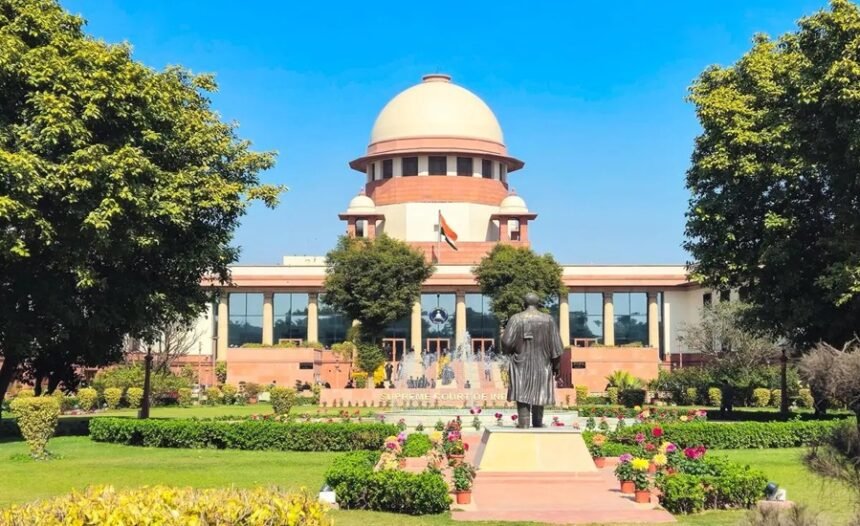
The Supreme Court chose not to halt the Central Board of Secondary Education’s three-language policy on Tuesday, July 14, even though petitioners had asked for exactly that. The policy took effect this academic year, 2026-27, and the bench, made up of Chief Justice of India Surya Kant, Justice Joymalya Bagchi and Justice V Mohana, pushed the full hearing to next week instead of ruling immediately.
Petitioners argued that under the new rules, students from Class 9 onward must study two Indian languages, which in practice forces many to abandon a language they’ve been learning continuously since Class 5. They also objected to the policy’s treatment of English as a “non-native” language, and pointed to a shortage of teachers and textbooks for the native ones students are now expected to pick up.
Notice Issued, But No Interim Relief
Rather than granting a stay, the Court issued notice on the new round of petitions and scheduled a detailed hearing for next Wednesday. This builds on an earlier batch of petitions from May, when the Court had already issued notice to the Union government, NCERT and CBSE. Senior Advocate Anand Grover, representing one set of petitioners, argued that the circulars behind the policy simply lack legal grounding, insisting that only NCERT, not CBSE, has the authority to set academic requirements like this.
Grover put it bluntly: “The circulars are without authority of law. Only NCERT has authority, not CBSE. They are imposing languages without giving options. No teachers, no books are available if I want to learn Punjabi instead of Sanskrit. As a child, I must have the opportunity to learn a language which will give me employment.”
English Labelled “Non-Native,” Timeline Called Rushed
Senior Advocate Gopal Sankaranarayanan, representing a different batch of petitioners, acknowledged that CBSE had softened some requirements for senior classes through a later circular, but argued the core problems hadn’t gone away. His central objection was how the policy categorises English: “They have taken a 300-year-old language and treated English as a non-native language,” he told the Court.
Senior Advocate Shyam Divan echoed the concern that the June 29, 2026 circular’s dilution didn’t fix the underlying issues. He also flagged a timeline problem: the National Education Policy had originally planned for this kind of implementation by 2030, yet CBSE moved it up to the current academic year, years ahead of schedule.
Real Students, Real Disruption
Senior Advocate Mukul Rohatgi laid out the practical fallout for students already committed to other languages. He described a Class 9 student currently studying French now being told to pick up a third one and sit for an exam in April, warning that failing the internal assessment would carry consequences. He questioned how realistic the whole plan is: “How can anyone in Class 9 be told to start learning, say, Tamil? Which school in Delhi can provide a teacher who can teach?”
Sankaranarayanan pushed for interim protection on similar grounds, telling the Court that schools currently have neither the textbooks nor the teachers needed to actually implement the policy. He said he’d checked NCERT’s website that same day and found only three of the required textbooks available, far short of what’s needed to support instruction across India’s many languages.
“Only Three Books, Not 22”
Mukul added: “We went to the NCERT website a few minutes ago. Only three books, not 22. Children are being told to drop English and other foreign languages and take up native languages. They had said that by July 1 textbooks would be ready. Teachers have to be ready for 22 languages. This is damaging the status quo.” He also raised a separate worry, that teachers could end up losing their jobs if schools are forced to suddenly restructure which languages they offer.
The Chief Justice wasn’t moved by the argument for a stay, responding simply, “Learning of language never goes waste.” When Sankaranarayanan pressed further on the risk of teachers being dismissed, the CJI offered a similarly terse reply: “If dismissed, we can reinstate.”
Government Given Ten Days to Respond
Additional Solicitor General Aishwarya Bhati, representing the Union government, asked for two weeks to file a formal response. The Court didn’t grant the full request, ordering instead that the reply be submitted within ten days. The bench also heard from counsel for intervenor Fauzia Khan, a former Maharashtra minister, represented by Advocates Rahul Shyam Bhandari and G Priyadharshini, who argued that the policy has taken a toll on children’s mental health, particularly those from economically weaker sections.
Key Takeaway: The Supreme Court’s refusal to stay CBSE’s three-language policy means its implementation for the 2026–27 academic year will continue while the constitutional and legal challenges are heard. The case raises important questions about the powers of CBSE and NCERT, the implementation of the National Education Policy, students’ language choices, availability of teachers and textbooks, and the practical impact of introducing additional Indian languages in schools. As the Union government prepares its response, the outcome of the case is expected to shape the future of language education policy, balancing educational objectives, administrative feasibility and students’ interests within India’s multilingual framework.
M.C.Q.
Question 1: Education is placed under which of the following lists in the Seventh Schedule of the Constitution of India?
- A. Union List
- B. State List
- C. Concurrent List
- D. Residuary List
Question 2: The National Education Policy (NEP) 2020 recommends the implementation of which of the following in school education?
- A. Two-language formula
- B. Three-language formula with flexibility in language choice
- C. English as the compulsory medium of instruction
- D. One national language for all schools
Read More: India’s Promising EXIM Container Manufacturing Milestone