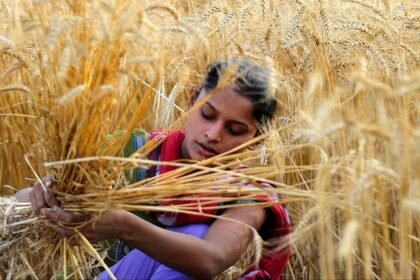

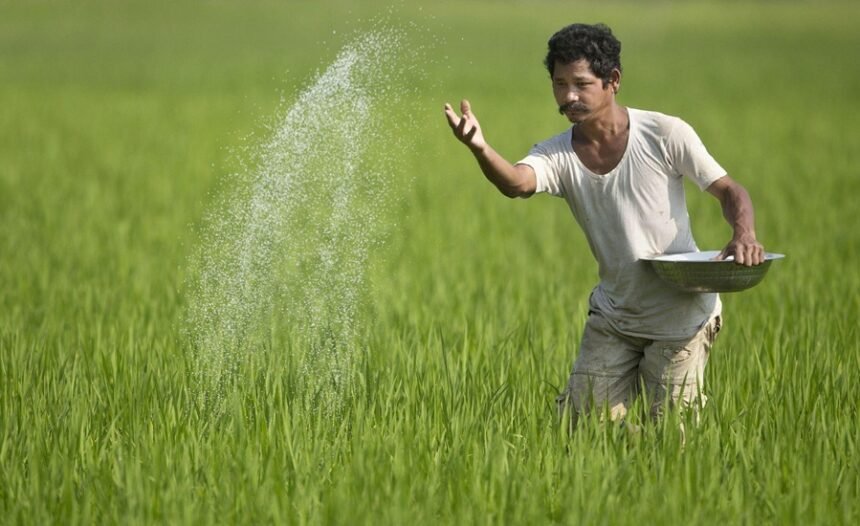
Small farmers, women and disadvantaged groups across India are getting easier access to farm machinery through the Sub-Mission on Agricultural Mechanization (SMAM), with particular attention going to underserved and North-Eastern states where access to agricultural technology has historically lagged. Since the scheme began, ₹9,404.47 crore has gone toward putting 21.61 lakh agricultural machines into the hands of individual farmers nationwide. On the technology side, more than 40,928 drone demonstrations have been carried out across 40,918 hectares, backed by ₹52.5 crore in funding, pushing precision agriculture further into the mainstream.
Why Mechanization Matters for Indian Agriculture
Machinery and modern technology touch nearly every stage of farming in India today, land preparation, sowing, irrigation, plant protection, harvesting and post-harvest handling. When farms rely less on manual labour and animal power, operations happen faster and more efficiently. That, in turn, brings down production costs and lifts the overall quality of farming practices.
SMAM was launched in 2014-15 to drive this shift forward. It runs as a Centrally Sponsored Scheme under the Rashtriya Krishi Vikas Yojana (RKVY), built around the idea of “reaching the unreached”, extending mechanization’s benefits to small and marginal farmers, women, Scheduled Castes, Scheduled Tribes, Farmer-Producer Organizations, Self-Help Groups and rural entrepreneurs who might otherwise be left out.
The scheme works largely by setting up Custom Hiring Centres (CHCs), essentially collections of farm machinery and equipment that farmers can rent rather than buy, and by building hubs for high-end, high-value agricultural equipment. It also distributes machinery directly, runs demonstrations and capacity-building programmes to raise awareness, and pays particular attention to regions where farm power is scarce. For farmers dealing with small landholdings and steep capital costs, affordable rental access through CHCs is a core part of the solution. On top of that, SMAM handles performance testing and certification of agricultural machinery, and runs targeted outreach campaigns to get more stakeholders on board.
The Five Pillars Behind SMAM’s Approach
SMAM’s design rests on a handful of strategic pillars, each aimed at making mechanization more accessible, more efficient and less physically demanding for farmers.
- The first is promoting mechanization itself, through training, testing, demonstrations and post-harvest support. This pillar is about giving farmers access to modern technology while also building up infrastructure for processing, storage, value addition and managing crop residue.
- The second is direct financial help for buying machinery. Through Direct Benefit Transfer, general beneficiaries get a 40% subsidy on machine cost, while SC/ST farmers, small and marginal farmers, and beneficiaries in North-Eastern states get 50%. Separately, small and marginal farmers can claim ₹2,000 per hectare for mechanized services, including drone use, delivered through CHCs, SHGs and FPOs.
- The third pillar backs Farm Machinery Banks (FMBs) for custom hiring, offering SHGs, FPOs and local institutions 80-90% financial support to acquire machinery. CHCs themselves get 40% of project cost covered for projects up to ₹250 lakh, while FMBs receive 80% support for projects up to ₹30 lakh.
- The fourth pillar funds hi-tech, high-productivity equipment hubs, stocked with advanced, high-capacity machines built for specific crops, aimed at boosting efficiency and giving farmers access to equipment they otherwise couldn’t afford.
- The fifth pillar is specific to the North Eastern Region, where SMAM offers enhanced support tailored to regional needs, including subsidies of up to 100% for small machinery and 95% support for Farm Machinery Banks.
The Numbers Behind the Scheme
Between 2014-15 and 2025-26, central assistance worth ₹9,404.47 crore has gone toward distributing 21.61 lakh machines to individual farmers, alongside setting up 27,554 Custom Hiring Centres, 646 Hi-tech Hubs, and 25,608 Farm Machinery Banks. The number of farmers benefiting from individual machine ownership climbed from 2.07 lakh in 2020-21 to 2.32 lakh in 2024-25, a sign that the scheme’s reach has been steadily growing.
Funding itself is split between the Centre and states. Most states work on a 60:40 basis, North-Eastern and Himalayan states get a more generous 90:10 split, and Union Territories receive full, 100% Central funding. This tiered structure is designed to make mechanization achievable across very different regional circumstances.
Drones Enter the Picture
SMAM has also pushed drone adoption as part of its mechanization push. With ₹52.50 crore in funding under the scheme, the Indian Council of Agricultural Research (ICAR) has run large-scale field demonstrations of drone technology across the country.
Between 2023-24 and 2025-26, ICAR worked alongside State Agricultural Universities and Krishi Vigyan Kendras (KVKs) to conduct 40,928 Kisan Drone demonstrations spanning 40,918 hectares, focused on applying nutrients, fertilizers and agro-chemicals according to standard operating procedures.
To help drones catch on more broadly, SMAM funds both procurement and demonstrations. Institutions like ICAR bodies, KVKs and State Agricultural Universities can get full financial support, up to ₹10 lakh per drone, while Farmer-Producer Organizations qualify for grants covering up to 75%. Agencies offering drone services through service-based models also receive a contingency allowance of ₹6,000 per hectare. On inclusivity, the scheme sets aside 30% of its total funding specifically for women farmers, aiming to widen their access to machinery and their participation in mechanized farming.
What SMAM Has Achieved So Far
Taken as a whole, SMAM has become a significant driver of productivity, efficiency and inclusiveness in Indian agriculture. By focusing on small and marginal farmers, women, SC/ST communities and underserved regions, it has closed real gaps in mechanization access through subsidies, Custom Hiring Centres, Farm Machinery Banks and region-specific support. Its investment in training, demonstrations, post-harvest infrastructure and newer technologies like drones reflects a forward-looking approach to modernising farming. Through the institutional infrastructure it has built, SMAM has helped cut down physical labour, made farm operations more timely, and supported higher productivity across the board.
Key Takeaway: The Sub-Mission on Agricultural Mechanization (SMAM) has become a key component of India’s agricultural modernisation efforts by improving access to farm machinery for small and marginal farmers, women, SC/ST communities and underserved regions through subsidies, Custom Hiring Centres, Farm Machinery Banks and targeted regional support.
Operating under the Rashtriya Krishi Vikas Yojana (RKVY), the scheme has also accelerated the adoption of advanced technologies such as Kisan Drones, strengthened post-harvest infrastructure, and promoted skill development and mechanized farming practices. With substantial public investment, extensive institutional support and region-specific funding patterns, SMAM is enhancing farm productivity, reducing labour dependence, improving cost efficiency and contributing to sustainable, technology-driven agricultural growth in India.
M.C.Q.
Question 1: The Sub-Mission on Agricultural Mechanization (SMAM) was launched under which of the following schemes?
- A. National Food Security Mission (NFSM)
- B. Rashtriya Krishi Vikas Yojana (RKVY)
- C. Pradhan Mantri Krishi Sinchayee Yojana (PMKSY)
- D. National Mission for Sustainable Agriculture (NMSA)
Question 2: Under the Sub-Mission on Agricultural Mechanization (SMAM), the Centre-State funding pattern for most States is:
- A. 50 : 50
- B. 60 : 40
- C. 75 : 25
- D. 90 : 10
Read More: Udyam Registration: An Essential Guide to India’s MSME Boom