

Indian Railways turned in a solid performance in July 2026, with both freight and passenger numbers moving up. Heavier freight loads, more passengers on board, higher revenue, and stronger movement of key goods all point to the same thing: the railways are still pulling their weight in India’s economy, logistics network, and everyday connectivity.
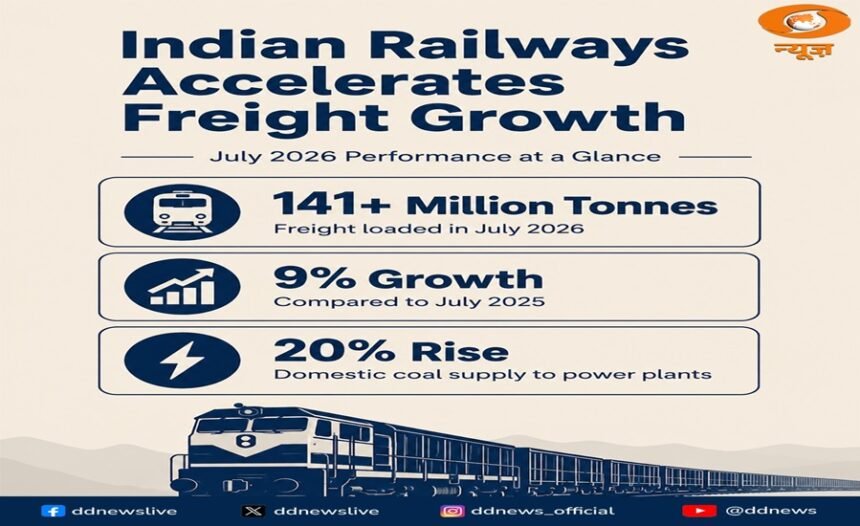
Freight loading for the month came to 141.3 million tonnes, up from 129.7 million tonnes in July 2025, a 9% jump year-on-year.
Which commodities pushed the numbers up
A handful of commodity groups drove most of this growth. Iron ore loading shot up 22.2%, fertilizers rose 12%, and both coal and food grains climbed 11.5%. Other goods, grouped together, grew 12.1%. Behind these figures is stronger demand coming out of infrastructure projects, manufacturing, and agriculture, sectors that all lean heavily on rail for moving raw materials and finished goods.
Coal deserves a separate mention here. Railways stepped up coal deliveries to thermal power plants by 20% compared to the same month last year, a move tied directly to keeping up with rising electricity demand and shoring up energy security.
Freight revenue climbs alongside volume
More freight moving means more money coming in, and July reflected that. Freight revenue rose by ₹1,137 crore over July 2025, an 8% increase year-on-year.
The gains weren’t spread evenly across zones, though. East Central Railway and Eastern Railway each posted 33% growth in freight revenue, well ahead of the pack. West Central Railway followed at 23%, and South Eastern Railway came in at 10.33%. These four zones essentially carried the freight revenue growth for the month, even as the network as a whole moved upward together.
Passengers keep coming back
Passenger numbers told a similar story of steady growth, if less dramatic. Indian Railways carried 63.35 crore passengers in July 2026, compared to 62.19 crore in July 2025. That’s a modest but real increase, and it came from both suburban commuter services and longer-distance non-suburban routes, suggesting the growth wasn’t limited to any one type of travel.
Key Takeaway: Put the freight and passenger numbers side by side, and July 2026 looks like a month where nearly every metric moved in the same direction: more tonnes loaded, more revenue earned, more coal delivered to power plants, and more people riding the rails. That kind of across-the-board growth doesn’t happen by accident. It usually reflects demand building up in the wider economy, whether that’s construction sites needing iron ore, farms needing fertilizer, or power plants needing coal to keep the lights on.
Whether this pace holds through the rest of the year will depend on a mix of factors, monsoon effects on agriculture and coal transport, industrial output, and how much passenger demand keeps growing in both city and intercity travel. For now, though, the July numbers give Indian Railways a strong month to point to, one that reinforces its position as a backbone of India’s freight and passenger transport system, supporting industrial growth and connecting the country in ways that few other networks can match at this scale.
MCQ’s:
1. According to the July 2026 data, Indian Railways recorded freight loading of:
(A) 129.7 million tonnes
(B) 141.3 million tonnes
(C) 137.5 million tonnes
(D) 150.2 million tonnes
2. Which commodity recorded the highest percentage increase in freight loading by Indian Railways in July 2026?
(A) Coal
(B) Fertilizers
(C) Iron ore
(D) Food grains
Read more: Fueling Economic Growth: India’s Coal Production Surges 7.5% as Dispatches Skyrocket in July 2026