
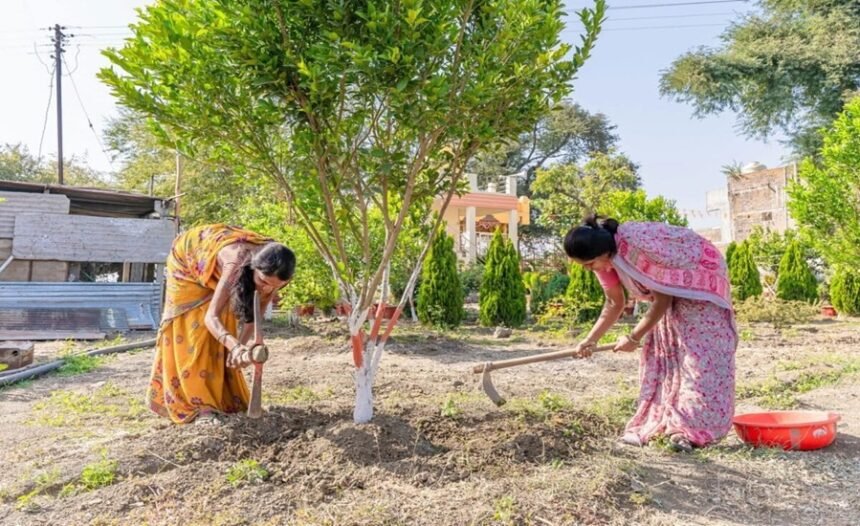
The Green Credit Programme is a mechanism built to reward environmentally positive actions and to further the goals of the Mission LiFE (Lifestyle for Environment) movement, which pushes communities toward behavioural changes that support sustainable, environment-friendly living. Its broader aims include expanding green cover, boosting carbon sequestration, restoring lands that have degraded over time, and cutting down carbon footprints through wider adoption of environment-friendly technologies and practices.
The Legal and Digital Framework Behind It
The Central Government notified the Green Credit Rules, 2023, on October 12, 2023, under the Environment (Protection) Act, 1986, creating a pathway for voluntary environmentally positive actions to earn Green Credits. Within the programme, the specific approach for tree plantation and eco-restoration of degraded forest land was notified on February 22, 2024, and later revised on August 29, 2025. A dedicated portal, the Green Credit Programme Portal, has also been built to support the initiative and can be accessed at https://moefccgcp.in/.
The Indian Council of Forestry Research and Education, based in Dehradun, serves as the Administrator of the programme, handling its overall management, day-to-day operation, and the actual issuance of green credits.
Restoring Degraded Forest Land Through Public-Private Participation
A central goal of the programme is restoring degraded forest lands, and it does this by drawing in both public and private sector entities. The specific parcels of degraded forest land brought under this initiative are selected and registered by the State Forest Department, but only after they’ve been verified on the ground.
Green Credits themselves can’t be claimed right away. An applicant has to wait until at least five years of restoration work are done and a minimum canopy density of 40 percent has been reached. That five-year window gives planted seedlings and natural regeneration enough time to mature and build up adequate canopy cover, reaching the 40 percent density threshold that corresponds to what’s classified as a moderately dense forest.
Wider Benefits for Biodiversity and Local Communities
The forest restoration work carried out under this programme isn’t just about hitting a canopy target. It’s also meant to enhance biodiversity and improve how productive forest resources are overall. For local communities, restoring degraded forest land means better access to timber, non-timber forest produce, fodder, water, and other ecosystem services that depend on healthy forests.
Verification and Monitoring of Claims
Once an applicant undertakes restoration activities, a “designated agency” under the programme is responsible for verifying the claim, submitting its findings to the Administrator so green credits can be issued accordingly. To support this process and ensure the programme runs smoothly, a comprehensive Manual on Monitoring and Reporting of Restoration Activities has also been put together, guiding how implementation and monitoring should proceed under the Green Credit Programme.
Key Takeaway: The Green Credit Programme establishes a voluntary, legally backed framework for incentivising environmental restoration by rewarding verified actions that contribute to Mission LiFE and India’s broader climate and sustainability goals. Governed by the Green Credit Rules, 2023, and administered by the Indian Council of Forestry Research and Education (ICFRE), the programme promotes public-private participation in restoring degraded forest lands through a transparent system of verification, monitoring, and credit issuance.
By requiring sustained restoration over at least five years before Green Credits are awarded, the initiative emphasises long-term ecological outcomes, including increased forest cover, carbon sequestration, biodiversity conservation, and improved ecosystem services that benefit both the environment and local communities.
M.C.Q.
Question 1: The Green Credit Programme is administered by which of the following institutions?
- A. Forest Survey of India (FSI)
- B. Indian Council of Forestry Research and Education (ICFRE)
- C. National Biodiversity Authority (NBA)
- D. Wildlife Institute of India (WII)
Question 2: Under the Green Credit Programme, Green Credits for restoration of degraded forest land are issued only after:
- A. One year of plantation activity
- B. Three years of maintenance with 20% canopy density
- C. Five years of restoration and achieving a minimum canopy density of 40%
- D. Completion of satellite mapping of the restored area
Read More: Gyan Bharatam Mission: A Powerful Push to Save Manuscripts