
Electricity sits on the concurrent list, meaning both the Centre and States share responsibility for the power sector, though actual power distribution is carried out by distribution utilities working under their respective State Electricity Regulatory Commission (SERC) and State Government.
The Government of India’s core role lies in comprehensive planning, handled through the Central Electricity Authority, along with periodically introducing supportive policies to help those plans materialise. On top of that, the Centre backs State efforts through various schemes designed to help them deliver quality, reliable power to every consumer.
Capacity Additions and Transmission Growth in FY 2025-26
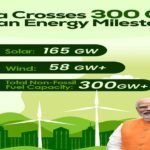
FY 2025-26 saw 9,470 MW of fossil fuel-based capacity added, alongside a much larger 55,225 MW of non-fossil fuel-based capacity. Battery Energy Storage System (BESS) capacity also grew by 2,668.54 MW, or 7,785.6 MWh, during 2026. On the transmission side, 12,139 circuit kilometres of inter-State and intra-State transmission lines were added over the same fiscal year.
Beyond these headline numbers, the Central Government has rolled out a series of targeted measures, detailed below to improve upon the existing power sector:
Integrating Renewable Energy Into the Grid
Transmission planning under the National Electricity Plan (Transmission) is coordinated deliberately, aiming to avoid congestion, cut down curtailment, and make network expansion as efficient as possible. Since renewable sources come with inherent intermittency, the Government is leaning on a mix of energy storage and hybrid solutions to keep the grid stable and supply reliable. The plan factors in roughly 47 GW of Battery Energy Storage Systems for integration by 2031-32, and a separate roadmap has been drawn up for bringing 100 GW of Pumped Storage Plants online between 2025-26 and 2035-36.
Other steps include developing Renewable Energy Zones and pooling stations so large volumes of renewable capacity can be evacuated efficiently through shared infrastructure, and budgetary support for the power sector from the Ministry of New and Renewable Energy for Intra-State transmission projects under the Green Energy Corridor scheme. Grid operations are also being tightened up, better forecasting, scheduling, real-time dispatch and ancillary services, all aimed at cutting balancing costs, alongside market reforms like real-time electricity markets and flexibility mechanisms that make better use of existing resources and reduce integration costs.
Regulatory and Technical Adjustments Supporting RE Integration
Under the Third Amendment to the CERC General Network Access Regulations, 2022, connectivity is now granted separately for solar and non-solar hours, based on an assessment of available margins at RE pooling stations, which improves how existing transmission assets get used and brings down overall system costs. For hybrid projects, connectivity is assessed to optimise the total renewable energy quantum, supporting more efficient grid use.
The intra-state transmission network is being expanded in step with planned renewable capacity additions, and the Inter-State Transmission System for renewable schemes is being connected with intra-state networks to strengthen overall grid reliability. A number of modern Static Synchronous Compensators (STATCOM) and Static VAR Compensators (SVC) are being installed to dynamically manage reactive power flow and keep voltage levels stable, while generators capable of ramping up quickly, hydro or gas plants, for example, are scheduled optimally to keep load and generation balanced.
Building Domestic Battery Manufacturing Capacity
The Ministry of Heavy Industries runs a Production Linked Incentive scheme called the “National Programme on Advanced Chemistry Cell (ACC) Battery Storage,” approved in May 2021 with a total outlay of Rs. 18,100 crore, aimed at building 50 GWh of domestic Advanced Chemistry Cell manufacturing capacity, 10 GWh of which is reserved specifically for Grid Scale Stationary Storage applications.
The Ministry of Power notified guidelines in March 2022 for procuring and using Battery Energy Storage Systems as part of generation, transmission and distribution assets, along with ancillary services. Tariff-Based Competitive Bidding guidelines have also been notified for distribution licensees procuring storage (BESS and Pumped Storage Plants), giving large-scale storage procurement a transparent framework to follow.
A National Roadmap and Funding for Storage
A National Framework for Promotion of Energy Storage Systems came out in September 2023, laying out a comprehensive roadmap for deploying storage technologies, integrating them into markets, and easing regulatory pathways. That same month, the Government approved a Viability Gap Funding scheme for Battery Energy Storage Systems; 13.22 GWh of BESS capacity is currently being implemented under this scheme, backed by a budget of Rs. 3,760 crore. Given how fast demand for BESS is growing, the Ministry of Power approved a second VGF scheme in June 2025, targeting 30 GWh of BESS capacity with Rs. 5,400 crore in financial support from the Power System Development Fund.
Waivers and Regulatory Relief for Storage Projects
BESS projects commissioned by June 2025, and Hydro Pumped Storage Projects where construction was awarded by June 2025, get a full waiver of Inter-State Transmission System charges, tapering by 25 percent annually after that. Co-located BESS projects get a full ISTS charge waiver if commissioned by June 2028, and PSP projects get the same waiver if their construction work is awarded by June 2028.
Via an order dated August 1, 2025, the Ministry of Power raised the threshold for Central Electricity Authority concurrence on hydro generating stations, off-stream open-loop projects, and on-stream Pumped Storage Plants, from Rs. 1,000 crore to Rs. 3,000 crore. Off-stream closed-loop PSPs have been exempted from needing this concurrence altogether. In February 2025, the CEA issued an advisory recommending that solar power projects co-locate storage equal to at least 10 percent of installed solar capacity, for a minimum of two hours, to make solar power more dispatchable. And through an amendment to the Electricity Rules in September 2025, consumers themselves are now permitted to develop, own, lease, or operate energy storage systems, opening up new ownership and business models.
Revamping the Distribution Sector
The Government launched the Revamped Distribution Sector Scheme (RDSS) in July 2021, aiming to improve power supply quality by making the distribution sector both financially sustainable and operationally efficient. Under this scheme, Rs. 1.53 lakh crore has been sanctioned for loss reduction works and Rs. 1.31 lakh crore for smart metering.
The smart metering sanction covers 19.79 crore consumer meters, 52.53 lakh Distribution Transformer meters, and 2.05 lakh feeder meters, adding up to 20.33 crore smart meters sanctioned based on proposals submitted by States and distribution utilities. So far, 5.73 crore smart meters have actually been installed under RDSS. States have also installed smart meters through their own plans and other schemes, bringing the total across the country to 7.24 crore smart meters installed under all schemes combined.
Additional Reforms Supporting Distribution Utilities
Beyond RDSS, several other steps have been taken. State Governments now have access to additional borrowing space equal to 0.5 percent of Gross State Domestic Product, conditional on carrying out specific power sector reforms, including improving the financial performance of distribution utilities. Additional prudential norms have also been set for sanctioning loans to state-owned power utilities, tied to how well distribution utilities perform against prescribed benchmarks.
Rules have been framed for implementing Fuel and Power Purchase Costs Adjustment (FPPCA) and cost-reflective tariffs, ensuring all reasonable costs of supplying electricity get passed through properly. Rules and a Standard Operating Procedure have also been issued to ensure subsidies are accounted for correctly and paid on time.
The Results So Far
Thanks to coordinated efforts between the Central and State Governments and the various reforms rolled out, overall transmission and distribution losses have come down noticeably, AT&C losses across the country dropped from 21.91 percent in FY21 to 15.04 percent in FY25. These combined efforts also helped distribution utilities collectively post a profit after tax of Rs. 2,701 crore in FY25, the first time this has happened since the Electricity Act, 2003 came into force. Power supply availability in rural areas has climbed from 12.5 hours in FY 2015 to 22.6 hours in FY 2025, while urban areas now enjoy 23.6 hours of supply in FY 2025.
Looking Ahead
Taken together, the steps around distribution, grid modernisation, transmission, energy storage, and localised generation and consumption of electricity are meant to strengthen India’s long-term energy security. The idea is to build resilient local energy supply chains, push electrification across the economy, cut reliance on imported fossil fuels, and enable domestic renewable energy resources to integrate reliably into the grid.
Key Takeaway: India’s ongoing power sector reforms reflect a comprehensive strategy to deliver reliable, affordable, and sustainable electricity by modernising generation, transmission, distribution, and energy storage infrastructure. Rapid additions in non-fossil fuel capacity, expansion of transmission networks, promotion of Battery Energy Storage Systems and Pumped Storage Plants, and regulatory reforms are enabling greater integration of renewable energy while strengthening grid stability.
At the same time, initiatives such as the Revamped Distribution Sector Scheme (RDSS), large-scale smart metering, tariff reforms, and performance-linked incentives for distribution utilities have significantly reduced transmission and distribution losses, improved the financial health of power utilities, and expanded electricity availability across rural and urban India, reinforcing the country’s long-term goals of energy security, clean energy transition, and sustainable economic growth.
M.C.Q.
Question 1: The Revamped Distribution Sector Scheme (RDSS), launched in 2021, primarily aims to:
- A. Promote offshore wind energy generation
- B. Improve the financial sustainability and operational efficiency of power distribution utilities
- C. Develop nuclear power plants in India
- D. Increase coal production for thermal power plants
Question 2: The National Programme on Advanced Chemistry Cell (ACC) Battery Storage, approved in 2021, is implemented by which Ministry?
- A. Ministry of Power
- B. Ministry of New and Renewable Energy
- C. Ministry of Heavy Industries
- D. Ministry of Mines
Read More: Atal Bhujal Yojana: India’s Colossal Groundwater Tracking and Strong Restoration Push