
The Cabinet Committee on Economic Affairs, led by Prime Minister Narendra Modi, has given the green light to a 43.218 km link corridor running along the Varuna river, connecting NH-31 with the Varanasi Ring Road. The whole point of the project is to ease congestion in Varanasi city.
Most of the corridor will run elevated, with 4 to 6 lanes depending on the stretch, and it will include a main carriageway plus flyovers, loops, ramps and service roads. The National Highways Authority of India will build it under the Hybrid Annuity Model. The total capital cost comes to a total of ₹10,998.32 crore, split between ₹4,565.33 crore for civil construction and ₹934.91 crore for land acquisition.
A key piece of the city’s decongestion plan
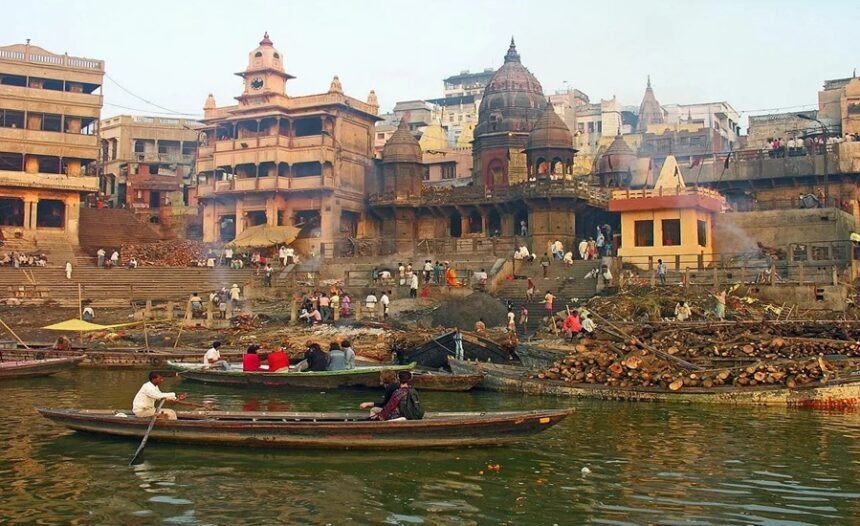
This corridor is one of the central pieces of the Varanasi Decongestion Plan. It’ll link NH-31 directly to Kashi Railway Station and, along the way, make it considerably easier to reach the Varanasi Ring Road, Varanasi Airport, Kashi Railway Station, Varanasi City Railway Station, Varanasi Junction, Deen Dayal Upadhyaya Junction, Ramnagar Port, Sampurnanand Sanskrit University, the ghats of Varanasi, and the neighbouring Chandauli region.
Cutting travel time in half
Vehicles on the corridor will be able to move at 80 to 100 km/h, which should bring the travel time between NH-31 and Kashi Railway Station down from roughly 40 minutes to about 20, a cut of nearly 50%. Beyond the time saved, the project is expected to take real pressure off the city’s road network, improve safety, lower how much it costs to operate a vehicle, and let both passenger and freight traffic move without getting stuck.
Tying into the bigger logistics picture
The corridor also feeds into regional connectivity more broadly. It improves access to one Economic Node, the Chandauli Social Economic Zone, one Social Node in Chandauli, and six major Logistics Nodes, all of which supports the kind of multimodal integration the PM Gati Shakti National Master Plan is built around. In practical terms, that means smoother movement of agricultural produce, industrial goods, construction materials and minerals, which should help logistics efficiency and economic growth across eastern Uttar Pradesh.
What it adds up to
Put together, the project is meant to give Varanasi a modern, access-controlled urban transport corridor, one that strengthens multimodal transport links, supports tourism and economic development, and makes life easier for both residents and visitors to the city.
Key Takeaway: The Cabinet’s approval of the ₹10,998.32 crore elevated corridor along the Varuna river marks a major investment in urban transport infrastructure aimed at decongesting Varanasi and improving regional connectivity.
Developed by the National Highways Authority of India under the Hybrid Annuity Model, the project will significantly reduce travel time, enhance access to key transport hubs, tourist destinations and logistics centres, and strengthen multimodal connectivity under the PM Gati Shakti National Master Plan. By facilitating the efficient movement of passengers and freight, improving road safety and supporting economic activity across eastern Uttar Pradesh, the corridor is expected to contribute to sustainable urban development and regional economic growth.
M.C.Q.
Question 1: The recently approved elevated corridor along the Varuna River in Varanasi will be implemented by which organisation?
- A. National Highways Logistics Management Limited
- B. National Highways Authority of India (NHAI)
- C. Inland Waterways Authority of India (IWAI)
- D. Dedicated Freight Corridor Corporation of India (DFCCIL)
Question 2: The Varuna River Elevated Corridor Project has been approved for implementation under which project delivery model?
- A. Engineering, Procurement and Construction (EPC)
- B. Build-Operate-Transfer (BOT)
- C. Hybrid Annuity Model (HAM)
- D. Toll-Operate-Transfer (TOT)
Read More: A Massive Establishment: Cabinet Clears New Rail Multitracking Projects