
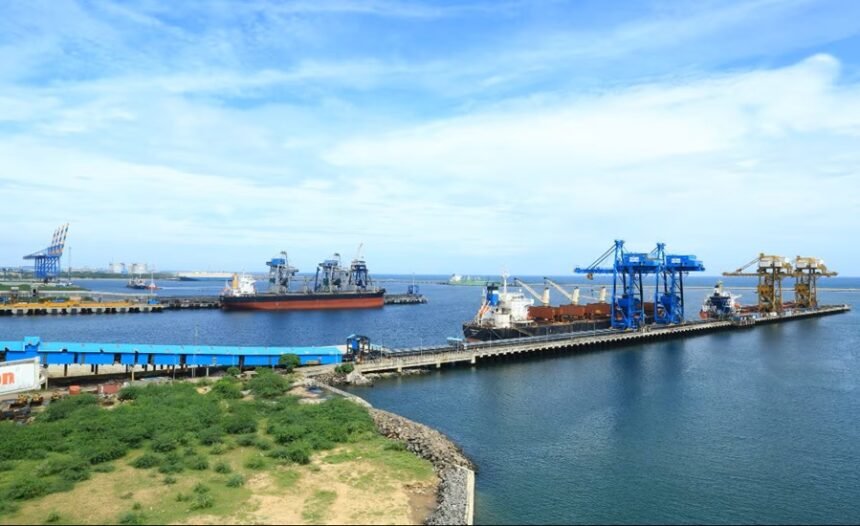
Kamarajar Port Limited (KPL) has completed its Capital Dredging Phase VI project at a cost of ₹440 crore, and the port can now handle even Capesize vessels as a genuine deep-water facility. With an operational draft of about 18.0 metres, it can now take in cargo parcels of upwards of 1,70,000 DWT. That puts Kamarajar Port in second place among India’s Major Ports, after Visakhapatnam Port, to offer an 18-metre draft.
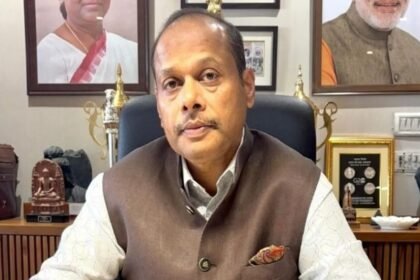
Union Minister of Ports, Shipping & Waterways Sarbananda Sonowal marked this critical milestone, saying: “Under the visionary leadership of Prime Minister Narendra Modi. India’s maritime sector is undergoing a historic transformation.
Guided by the vision of Maritime India Vision 2030 and Maritime Amrit Kaal Vision 2047, we are now building world-class ports, strengthening our logistics, enhancing global competitiveness, and positioning India as a leading maritime nation. The emergence of Kamarajar Port as the country’s second Major Port with an 18-metre draft is another milestone in this journey of creating modern, future-ready maritime infrastructure that will power India’s economic growth and global trade.”
What the Dredging Work Involved
The project was taken up as part of the government’s plan to make Kamarajar Port “Cape Compliant.” That meant deepening the outer approach channel from 20.0 m to 23.0 m and the inner entrance channel from 19.0 m to 22.0 m, along with the berths built to handle an 18 m draft and the harbour basin and its surrounding navigational areas, all at an investment of about ₹440 crore.
Sonowal added: “The successful completion of Capital Dredging Phase VI has transformed Kamarajar Port into a deep-draft, Cape Compliant port capable of handling fully laden Capesize vessels of up to 1,70,000 DWT. This achievement will significantly improve cargo-handling efficiency, reduce logistics costs, enhance ease of doing business and strengthen the port’s role as a key gateway for India’s EXIM trade. I congratulate the entire team of Kamarajar Port Limited for delivering this strategically important project, which further reinforces India’s march towards becoming a global maritime powerhouse.”
What This Means for Trade and Shipping
With the deeper draft in place, shipping lines can now deploy larger vessels, which brings down freight costs through economies of scale, improves operational efficiency, and increases how much cargo the port can handle. This is expected to bring some real economic benefits to trade in the region, and strengthen Kamarajar Port’s position against both domestic as well as international competitors, and support the ever-growing demands of India’s EXIM trade. With Cape Compliant depth now successfully in place, Kamarajar Port stands tall with other international ports in terms of bulk cargo handling capability.
Key Takeaway: The completion of Capital Dredging Phase VI has now made Kamarajar Port India’s second major port, right after Visakhapatnam Port, to achieve an 18-metre operational draft, enabling it to handle fully laden Capesize vessels of up to 1,70,000 DWT. Aligned with the Maritime India Vision 2030 and Maritime Amrit Kaal Vision 2047, the ₹440 crore project is expected to improve cargo-handling efficiency, significantly reduce logistics costs, and power up India’s EXIM trade by enhancing the port’s global competitiveness. This development is significant in the context of maritime infrastructure, port-led development, logistics, and India’s ever-growing role in international trade.
M.C.Q.
Question 1: Kamarajar Port recently became India’s second major port to achieve an operational draft of:
- A. 15 metres
- B. 16 metres
- C. 17 metres
- D. 18 metres
Question 2: Which was the first major port in India to achieve an 18-metre operational draft?
- A. Jawaharlal Nehru Port
- B. Paradip Port
- C. Chennai Port
- D. Visakhapatnam Port
Read More: Ladakh Article 371 Draft Marks a Critical Milestone