
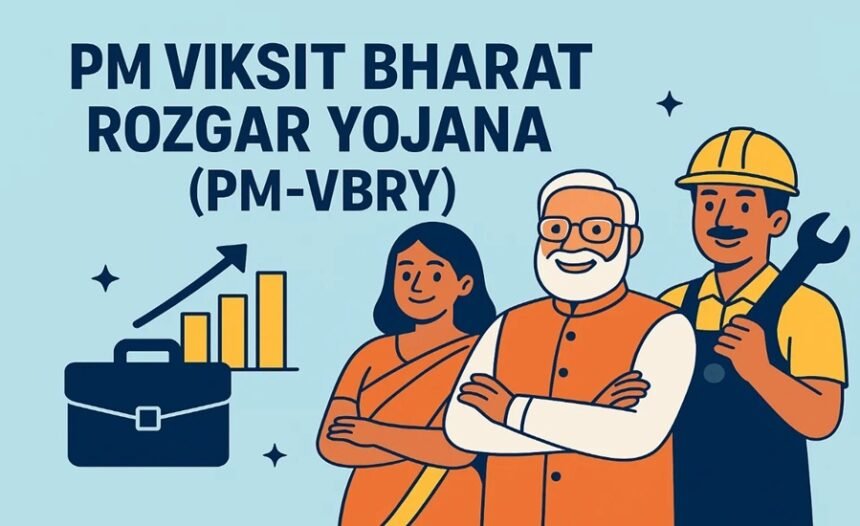
India’s workforce is a driving force behind its push toward Viksit Bharat 2047, and quality employment sits at the heart of inclusive growth. The Pradhan Mantri Viksit Bharat Rojgar Yojana (PM-VBRY) supports that vision by encouraging first-time employment and giving employers a reason to create new formal jobs.
Working through an EPFO-linked, tech-driven framework, the scheme pushes workforce formalisation forward, widens social security coverage, and strengthens financial security for workers. By bringing together employment generation, financial inclusion, and transparent implementation, PM-VBRY is helping build a skilled, secure, future-ready workforce to support India’s long-term economic growth.
Making the Most of India’s Demographic Dividend
India’s young, dynamic workforce ranks among its biggest strengths, offering a real chance to drive economic growth and deliver on the Viksit Bharat 2047 vision. Millions of young people join the labour market every year, and turning this demographic edge into lasting, inclusive development depends on expanding formal employment backed by social security.
PM-VBRY supports this national priority directly, encouraging first-time employment and job creation. Run through a transparent framework administered by the Employees’ Provident Fund Organisation (EPFO), it strengthens workforce formalisation while opening up opportunities for both employees and employers.
From Announcement to Implementation
PM-VBRY was announced in August 2025 and is being rolled out over two years, running from August 1, 2025, to July 31, 2027, with a total outlay of Rs. 99,446 crore. On August 1, 2026, the scheme marks its first full year of implementation, an important checkpoint in India’s push to expand formal employment and social security coverage.
The scheme aims to generate employment for more than 3.5 crore people, including 1.92 crore first-time employees, encouraging young people to join the organised workforce through EPFO registration. It also broadens social security coverage across sectors, with a particular focus on labour-intensive manufacturing, complementing the National Manufacturing Mission by driving employment in new and growing industries.
Two-Part Incentive Structure
PM-VBRY runs on a two-part incentive framework, one set of provisions for employees and another for employers.
First-time employees earning up to Rs. 1,00,000 a month qualify for this part of the scheme. They receive a one-time incentive equal to one month’s EPF wage, capped at Rs. 15,000, paid out in two instalments: the first after six months of service, and the second after twelve months of continuous service, once they complete a financial literacy programme. A portion of this incentive goes into a designated savings instrument, encouraging financial security and savings habits, and can be withdrawn by the employee later on.
Support for Employers
Employers become eligible for incentives tied to employees earning up to Rs. 1,00,000 a month, receiving up to Rs. 3,000 per month for two years for every eligible additional employee they retain for at least six months. This support brings down hiring costs and encourages employers to sustain job creation over time. In the manufacturing sector specifically, given its high potential for employment generation, these incentives extend into the third and fourth years as well.
What the Scheme Has Achieved So Far
In its first year, PM-VBRY has meaningfully strengthened workforce formalisation by encouraging first-time hiring and expanding social security coverage. It’s helping bring more workers into the organised sector while giving employers reason to create new jobs across industries.
Since August 2025, more than 72 lakh first-time employees have joined the formal workforce. Women make up nearly 30 percent of beneficiaries, reflecting greater female participation in formal employment. More than 15 lakh beneficiaries have already received employment-linked incentives under the scheme. By tying employment to EPFO registration and direct benefit transfers, PM-VBRY is strengthening India’s organised labour market and building a more secure talent pool.
Digital Systems Behind the Scheme
PM-VBRY leans on digital technology to keep implementation transparent, efficient and accountable, enabling smooth verification, benefit transfers, and real-time monitoring throughout.
The scheme runs through a fully digital, EPFO-linked platform that ensures seamless verification and efficient delivery of benefits. It relies on Aadhaar-based authentication, Universal Account Numbers (UANs), and regular Electronic Challan-cum-Return (ECR) filings, and incentives only become available once the UAN is authenticated through Face Authentication Technology on the UMANG App, a step that ensures compliance while still expanding social security coverage.
Incentives are transferred directly into Aadhaar-linked bank accounts via Direct Benefit Transfer, boosting transparency and accountability. A dedicated PM-VBRY portal handles end-to-end implementation of the scheme and offers real-time monitoring of beneficiaries and sector-wise progress.
The Government is also running extensive outreach efforts across the country to build awareness about the scheme and its provisions. Cross-Functional Teams made up of officials from EPFO, the Employees’ State Insurance Corporation (ESIC), and the Chief Labour Commissioner support these efforts, helping drive greater participation at the grassroots level.
Looking Ahead
As India moves toward sustained, inclusive growth, quality employment will remain central to improving livelihoods and building economic resilience. By encouraging first-time employment and supporting job creation, PM-VBRY is strengthening India’s formal employment ecosystem and expanding social security coverage. As it completes its first year, the scheme reaffirms the Government’s commitment to unlocking the full potential of India’s demographic dividend.
Key Takeaway: The Pradhan Mantri Viksit Bharat Rojgar Yojana (PM-VBRY) represents a major employment-linked social security initiative aimed at accelerating workforce formalisation, promoting first-time employment, and encouraging sustained job creation through EPFO-based incentives for both employees and employers. With an outlay of ₹99,446 crore for 2025–2027, the scheme combines direct financial support, Aadhaar-enabled digital verification, Direct Benefit Transfer, and real-time monitoring to expand social security coverage and strengthen transparency in implementation.
By supporting over 3.5 crore expected beneficiaries, incentivising employment in labour-intensive manufacturing, and improving financial inclusion through formal jobs, PM-VBRY reinforces India’s long-term objective of harnessing its demographic dividend while building a skilled, secure, and resilient workforce to support the Viksit Bharat 2047 vision.
M.C.Q.
Question 1: Which organisation is responsible for implementing the Pradhan Mantri Viksit Bharat Rojgar Yojana (PM-VBRY)?
- A. Employees’ State Insurance Corporation (ESIC)
- B. Employees’ Provident Fund Organisation (EPFO)
- C. National Skill Development Corporation (NSDC)
- D. Ministry of Corporate Affairs
Question 2: Under PM-VBRY, first-time employees earning up to what maximum monthly salary are eligible for benefits under the scheme?
- A. ₹50,000
- B. ₹75,000
- C. ₹1,00,000
- D. ₹1,50,000
Read More: India’s Power Sector Gets a Game-Changing Reliability Boost Breakthrough