
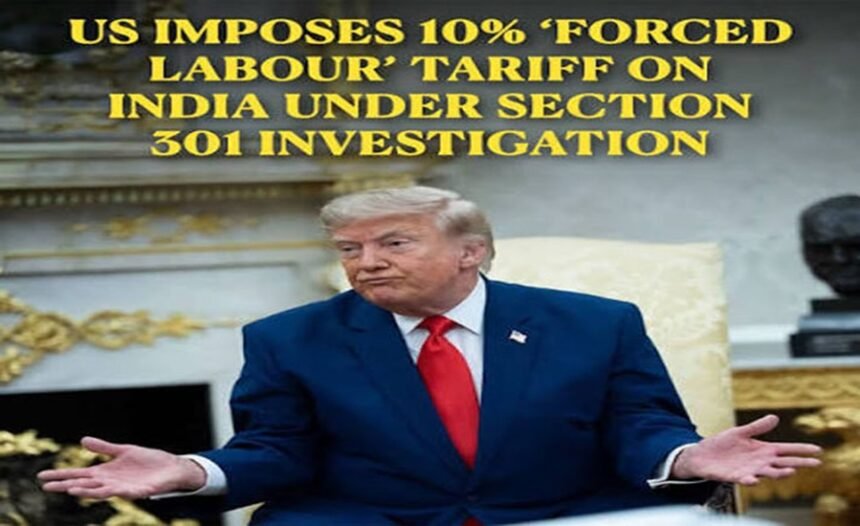
The Office of the U.S. Trade Representative has wrapped up its Section 301 investigation into goods made with forced labour across 60 economies, India among them, and announced final measures under the Trade Act of 1974. The decision, dated July 23, 2026, puts a 10% additional ad valorem duty on specified Indian exports to the U.S., down from the 12.5% figure floated back in June 2026.
India stayed engaged with the USTR throughout the process, submitting written responses, holding in-person consultations, and taking part in public hearings. That effort paid off: India landed in the lower tariff bracket, which gives it an edge over many other economies caught up in the same investigation.
Roughly half of Indian exports won’t be touched
A large portion of India’s exports to the U.S. stays outside the new 10% duty altogether. Generic pharmaceuticals, smartphones, and a handful of other specified goods already face no additional duties, so they’re excluded from these measures.
Products already covered under Section 232, things like steel, aluminium, and auto parts, are also left out of the new Section 301 tariff, since Section 232 duties already apply across most countries anyway.
Add it all up and about 45% of India’s exports to the U.S. escape the additional duty entirely. The other 55% will carry the 10% tariff, but even there, India comes out ahead of most other economies named in the investigation.
Textile mechanism and trade deal talks continue
One trade deal is still unfinished: the textile-specific mechanism mentioned in the final Section 301 measures hasn’t been set up or put into operation yet. India is pushing this forward as part of its broader negotiations with the U.S. on the Bilateral Trade Agreement.
The government has repeated its intent to work with Washington toward coming to an agreement and laid out in their joint statement.
Key Takeaway: India comes out of the Section 301 investigation in the lower tariff tier, at 10%, thanks to sustained engagement with the USTR during the process. Nearly half its exports to the U.S. dodge the new duty completely, and talks on the Bilateral Trade Agreement keep moving forward. Even with the new tariff in place, India holds a fairly strong position in the American market compared to other countries covered by the same investigation.
MCQ’s:
1. The Section 301 investigation, recently in the news, was conducted by which organisation?
A. World Trade Organization (WTO)
B. Office of the U.S. Trade Representative (USTR)
C. International Trade Centre (ITC)
D. U.S. Department of Commerce
2. According to the final outcome of the Section 301 investigation, India will face an additional ad valorem duty of:
A. 5%
B. 10%
C. 12.5%
D. 15%
Read more: India’s Mega Port Expansion: Shaking Up the Global Trade Powerhouse Race