
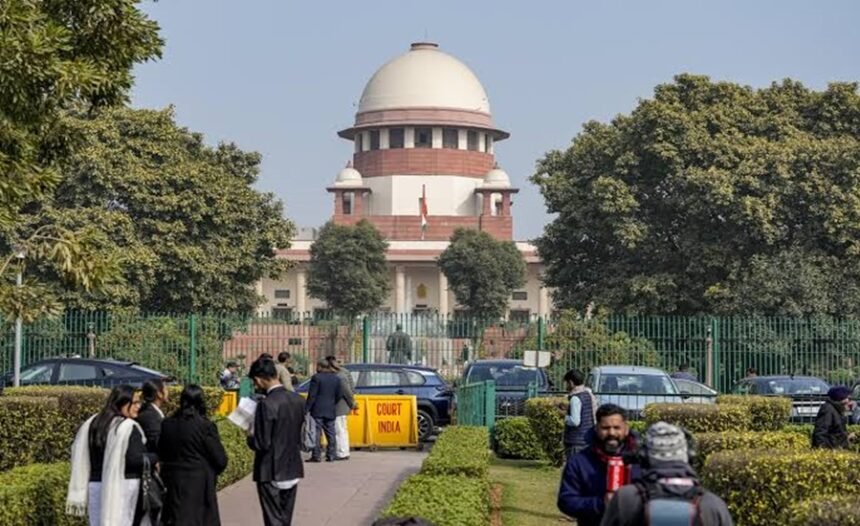
The Union Budget 2026 sets aside ₹2,010 crore for judicial infrastructure upgrades and eCourts. Of that, ₹810 crore goes to the Centrally Sponsored Scheme for building infrastructure in district and subordinate courts. The remaining ₹1,200 crore is for the eCourts Project Phase III, which covers digitization, training, and capacity-building work.
The government has been careful to note that these numbers follow approved outlays and depend on funds actually being available when needed. How fast cases get resolved is a separate question. That depends on case complexity, the quality of investigations, whether evidence is available, judicial procedures, how promptly the courts themselves move, and how actively litigants and lawyers show up and participate.
Rajasthan’s judge shortage persists
Numbers from the Rajasthan High Court show 11 of 50 sanctioned judge posts sitting empty. That leaves 39 judges on the bench, doing the work meant for 50. Move down to the subordinate court level and the gap is still there: 1,517 judicial officers are working against a sanctioned strength of 1,722, a shortfall of 205.
The bigger problem, though, is support staff. Statewide, only 11,226 people are in place out of 18,832 sanctioned posts. That’s a gap of 7,606, more than four times the shortfall on the judicial side. Courts can have judges on the bench and still move slowly if there’s no one to manage the paperwork behind them.
Tonk and Sawai Madhopur
In Tonk, the judicial numbers look close to full strength. 29 judicial officers are serving against 30 sanctioned posts, just one short. But staff numbers tell a rougher story: 247 people in place against 412 sanctioned posts, a shortfall of 165.
Sawai Madhopur follows a similar pattern. It has 24 judicial officers against 25 sanctioned posts, nearly full. Staff strength is where the gap opens up: only 194 people against a sanctioned 321, leaving 127 positions vacant.
Digital justice and legal aid keep expanding
The Government of India, working with state governments and the judiciary, has rolled out several measures meant to speed up access to justice nationwide, including in the Tonk-Sawai Madhopur constituency.
Money keeps flowing through the Centrally Sponsored Scheme to strengthen court infrastructure on the ground. The eCourts Project has brought in a set of digital tools: e-Filing, e-Pay, Virtual Courts, video conferencing, and the National Judicial Data Grid, which tracks case data across the country. Tele-Law services, offered through Common Service Centres, give people pre-litigation legal advice before a case even reaches court. Legal Services Authorities provide free legal aid to those who need it. On top of this, the government is leaning on Alternative Dispute Resolution methods, such as Lok Adalats and mediation, to help settle disputes without a full trial.
Key Takeaway: The 2026 budget makes the government’s priorities fairly clear: judicial infrastructure and digital courts are where the money is going. The eCourts Project Phase III brings real funding for modernization, and that matters. But sit that next to the vacancy numbers coming out of Rajasthan, and a gap shows up. Tonk and Sawai Madhopur both have judicial posts nearly filled, yet their support staff numbers are short by roughly a third to 40 percent.
Funding alone doesn’t fix that. A courtroom with a judge but no clerk, no support staff, and no one to process filings doesn’t move faster just because the eCourts budget went up. Filling judge and staff positions matters just as much as the money, if the goal is actually a faster, more workable justice system on the ground.
MCQ’s:
1. In the Union Budget 2026, how much has been allocated for the eCourts Project Phase III?
A. ₹810 crore
B. ₹1,000 crore
C. ₹1,200 crore
D. ₹2,010 crore
2. Which of the following initiatives is NOT a component of the eCourts Project?
A. e-Filing
B. National Judicial Data Grid (NJDG)
C. Virtual Courts
D. PM Gati Shakti Portal
Read more: Massive Milestone: ESIC’s SPREE Drive Protects 1.12 Crore New Workers Across India