
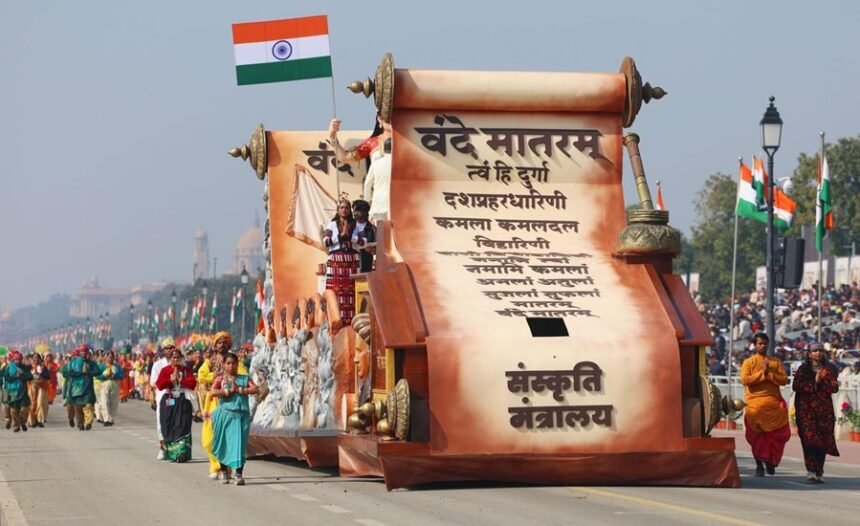
The Lok Sabha passed the Prevention of Insults to National Honour (Amendment) Bill, 2026, on Thursday, July 30, 2026, amid considerable noise in the House. The legislation makes it a punishable offence to intentionally insult Vande Mataram. Since the Rajya Sabha had already cleared it earlier, the Bill has now cleared both Houses, though Opposition protests that have repeatedly disrupted the Monsoon Session showed no sign of letting up.
A Debate That Lasted Just 15 Minutes
The debate over the Bill barely stretched past 15 minutes before it was cleared. It passed by voice vote after the Opposition’s proposed amendments were voted down, and only two members actually spoke during the brief exchange. DMK’s A. Raja, who had moved one of the amendments, objected strongly to the legislation. After it passed, he tore up a document and flung it toward the Well of the House while other Opposition members kept up their sloganeering.
“Today is a very dangerous day for the Parliament of this country,” Raja said as he moved his amendment, which was ultimately defeated by voice vote.
Opposition Calls It a “Hindutva Agenda”
DMK’s K. Kanimozhi pushed back hard against the Bill, describing it as a “Hindutva agenda” dressed up as nationalism. She argued the legislation ran counter to federalism and insisted that nationalism isn’t something a law can force on people. “You cannot impose nationalism by bringing a law, the song goes against the secularism of the country. The founding fathers had the wisdom to stop only with two stanzas, but today you are trying to polarise the country by making it compulsory and making it a criminal offence if we do not sing all the six stanzas,” she said.
Government’s Response: Parity With the National Anthem
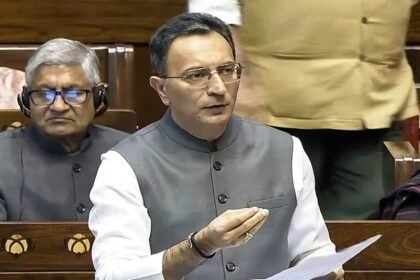
Responding on behalf of the government, Minister of State for Home Nityananda Rai said the new law would place Vande Mataram on equal footing with the national anthem, Jana Gana Mana. “For ek Bharat, shreshtha Bharat (one India, best India), we need complete (all six stanzas) Vande Mataram,” he said, closing his remarks with a chant of “Vande Mataram.”
Rai went on to accuse the Congress party of neglecting the national song’s due respect across its 76 years in power, claiming the party had instead leaned into what he called “appeasement politics.” BJP’s Sambit Patra echoed similar criticism, accusing Congress of failing to give Vande Mataram the recognition it deserved as the national song.
What the Amendment Actually Changes
The existing Prevention of Insults to National Honour Act already bars intentionally stopping the national anthem from being sung or disrupting a gathering while it’s being sung. Violations carry a prison term of up to three years, a fine, or both, and a second or later conviction brings a mandatory minimum of one year behind bars. This amendment simply extends those same protections to Vande Mataram.
A Session Marked by Repeated Disruptions
Before the Bill could even be taken up, the Lok Sabha was adjourned twice, once at 11 a.m. and again at 2 p.m., as Opposition members kept up their protests. Question Hour couldn’t be held for the eighth sitting in a row. The Opposition has been protesting the police action taken against students demonstrating over the NEET-UG controversy, while Samajwadi Party members separately raised allegations of irregularities in donations to the Ram temple. Shortly after the Bill passed, the House was adjourned for the day.
It marks the first piece of legislation to clear both Houses during this Monsoon Session, a session that’s otherwise been defined by constant disruption.
Key Takeaway: The passage of the Prevention of Insults to National Honour (Amendment) Bill, 2026, expands the scope of the existing law by making the intentional insult of Vande Mataram a punishable offence, extending to the national song the same legal protections already available to the national anthem.
While the government has presented the amendment as a step towards promoting national unity and according equal respect to national symbols, the legislation also sparked sharp political debate over its implications for secularism, federalism, and freedom of expression, reflecting the continued intersection of constitutional values, national identity, and parliamentary politics.
M.C.Q.
Question 1: The Prevention of Insults to National Honour (Amendment) Bill, 2026 primarily seeks to:
- A. Declare Vande Mataram as the National Anthem of India.
- B. Extend legal protection against intentional insult to Vande Mataram.
- C. Make the singing of Vande Mataram compulsory in all educational institutions.
- D. Replace the Prevention of Insults to National Honour Act with a new legislation.
Question 2: Under the Prevention of Insults to National Honour Act, the punishment for intentionally insulting or disrupting protected national symbols may extend to:
- A. One year imprisonment only
- B. Two years imprisonment only
- C. Three years imprisonment, or fine, or both
- D. Five years imprisonment without fine
Read More: DAANVEER: An Amazing New Push for Gram Panchayats