
Mission Saksham Anganwadi and Poshan 2.0 is a Centrally Sponsored scheme that channels a package of six services to eligible beneficiaries through Anganwadi Centres: Supplementary Nutrition (SNP), Pre-school Non-formal Education, Nutrition & Health Education, Immunization, Health Check-up, and Referral Services. Three of these, Immunization, Health Check-up and Referral Services, fall under the health umbrella and are delivered through the National Health Mission (NHM) and the broader public health infrastructure.
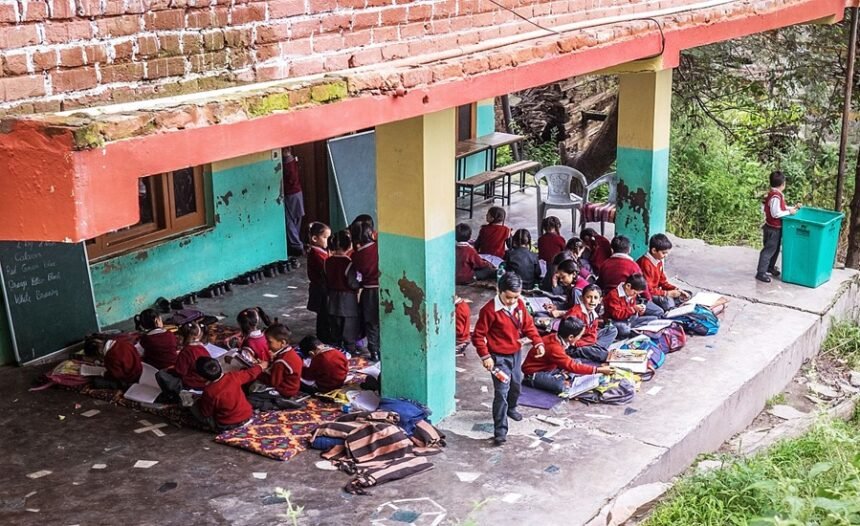
These services reach registered beneficiaries across the country, namely children up to age 6, pregnant women and lactating mothers, and additionally reach adolescent girls aged 14 to 18 in Aspirational Districts across states as well as in all districts of the North Eastern Region, all through the Anganwadi Centre platform.
Two Lakh Centres Upgraded Into “Saksham” Anganwadis
Under this Mission, two lakh Anganwadi Centres located in Government buildings have been approved as Saksham Anganwadis, meant to deliver better nutrition along with Early Childhood Care and Education, as part of the 15th Finance Commission cycle. These upgraded centres come equipped with LED screens, water filtration systems, a Poshan Vatika (nutrition garden), Early Childhood Care and Education material, and Building as Learning Aid (BALA) paintings. In Uttar Pradesh alone, 23,697 AWCs have been approved for this upgrade, with 206 of them located in Ghaziabad district.
Incentives Tied to Performance
Anganwadi Workers and Helpers under this Mission receive a monthly performance-based incentive, Rs. 500 for workers and Rs. 250 for helpers, contingent on monitoring growth for at least 80% of children in the 0-6 age bracket and completing at least 60% of scheduled home visits.
Digital Tools Powering the Ground-Level Work
The Ministry funds the procurement of smartphones for Anganwadi Workers, Lady Supervisors, and Block Coordinators, all of whom use these devices to register beneficiaries and track and monitor data through the Poshan Tracker app. Funds are also released for Growth Monitoring Devices, including Infantometers and Stadiometers for measuring length and height, and Weighing Scales designed for infants as well as for mothers and children, to record weight. The Central Government provides Rs. 10,000 plus GST per smartphone and Rs. 8,000 for a set of four Growth Monitoring Devices, shared on a cost-sharing basis with states.
Recording each registered child’s length, height and weight is a core part of the scheme, since it determines whether a child falls into the Normal, Underweight, Stunted, Severe Acute Malnutrition (SAM), or Moderate Acute Malnutrition (MAM) category. The Poshan Tracker app has given the Ministry a way to monitor how the scheme is playing out on the ground across multiple parameters and to correct course where needed. It captures near real-time data on things like AWC openings, daily attendance of children, ECCE activities, growth monitoring, provision of Hot Cooked Meals and Take-Home Rations, and growth measurement more broadly.
Poshan Vatikas: Growing Nutrition at the Community Level
A central piece of the Mission is ensuring proper nourishment through Poshan Vatikas, or nutrition gardens, set up across the country to give communities easy, affordable access to fruits, vegetables, medicinal plants and herbs. These gardens have been developed at Anganwadi Centres specifically to encourage dietary diversity and greater consumption of wholesome, locally grown produce.
Poshan Vatikas address a dietary diversity gap that keeps showing up in survey after survey, by supplying a range of fruits, nuts, herbs, medicinal plants and vegetables throughout the year. The idea behind them is to get community members cultivating local food crops right in their own backyards. A nutrition garden like this provides a cheap, steady, and convenient supply of fresh fruits and vegetables, the kind of thing good nutrition actually depends on. Green vegetables and seasonal fruits, in particular, carry vitamins and minerals that guard against micronutrient deficiencies and disease.
Key Takeaway: Mission Saksham Anganwadi and Poshan 2.0 strengthens India’s nutrition and early childhood development framework by delivering an integrated package of nutrition, health, and education services through Anganwadi Centres.
Through the upgradation of Saksham Anganwadis, performance-linked incentives for frontline workers, digital monitoring via the Poshan Tracker app, improved growth monitoring infrastructure, and the promotion of Poshan Vatikas, the Mission seeks to improve maternal and child nutrition, address malnutrition and micronutrient deficiencies, and enhance service delivery through technology-enabled governance. As a key component of India’s social welfare architecture, the scheme aims to build healthier communities and improve human development outcomes across the country.
M.C.Q.
Question 1: Which of the following services provided under Mission Saksham Anganwadi and Poshan 2.0 is delivered through the National Health Mission (NHM)?
- Immunization
- Health Check-up
- Referral Services
Select the correct answer:
- A. 1 and 2 only
- B. 2 and 3 only
- C. 1 and 3 only
- D. 1, 2 and 3
Question 2: The Poshan Tracker application is primarily used to:
- A. Conduct online training for Anganwadi Workers only
- B. Monitor beneficiary registration, growth monitoring and service delivery under Mission Saksham Anganwadi and Poshan 2.0
- C. Disburse cash benefits directly to beneficiaries
- D. Procure food grains for Anganwadi Centres
Read More: Food Testing in India: A Proven Boost to Food Safety