


America’s crackdown on classroom screen time keeps getting bigger. As of this spring , roughly 37 states have moved to restrict phones in schools or ban them outright. At the strictest end, some districts have gone “bell-to-bell,” meaning students keep their phones locked in magnetic pouches from the first bell to the last.
And schools are putting real money behind it. New York City set aside $29 million for phone pouches, and Los Angeles committed another $5.2 million .
So where’s all this coming from? Mostly from teachers who are fed up. According to a Pew survey, one in three teachers call students being distracted by phones a “major problem,” and among teachers that number jumps to a striking 72%.
|
Group |
Unweighted sample size |
Plus or minus … |
|
Total sample |
2,531 |
2.4 percentage points |
The public is on board too: 74% of Americans now back phone bans in middle and high school classrooms, up from 68% just a few months earlir.
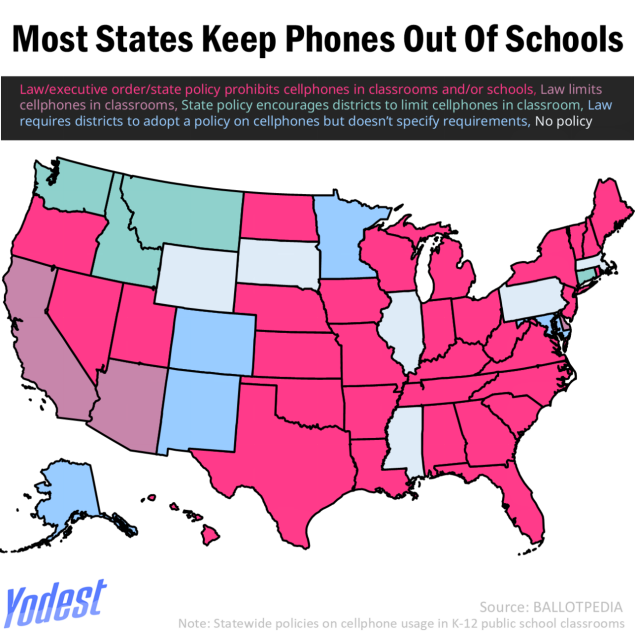
So where’s the test-score boost?
In one sense, the bans are doing exactly what they’re supposed to. A national study led by researchers from Stanford, Duke, Michigan and Pennsylvania found that once strict pouch policies kicked in, the share of students using their phones in class for personal reasons dropped from 61% to just 13%. GPS tracking data told a similar story, showing about a 30% drop in phone activity during school hours by the third year.
Here’s the catch: grades aren’t really budging. Researchers found that gains in standardized test scores were “consistently close to zero,” and there was little to no real change in attendance, classroom attention, or online bullying either. High schools did a bit better, with small gains in math, while middle schools actually saw modest declines.
Where the bans are making a difference is in how students behave, and that hasn’t been all good news. Suspension rates jumped about 16% in the first year, as schools enforced the new rules and students got used to them. Student well-being dipped at first, too. But give it time: by the third year, well-being had climbed above where it started, and discipline rates had settled back to normal.