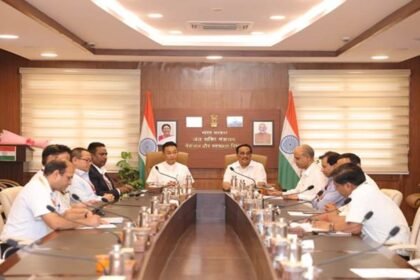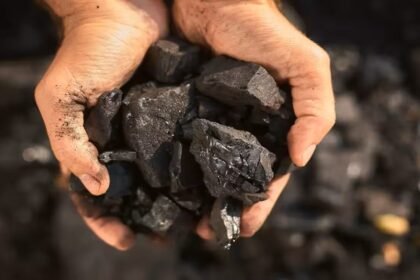

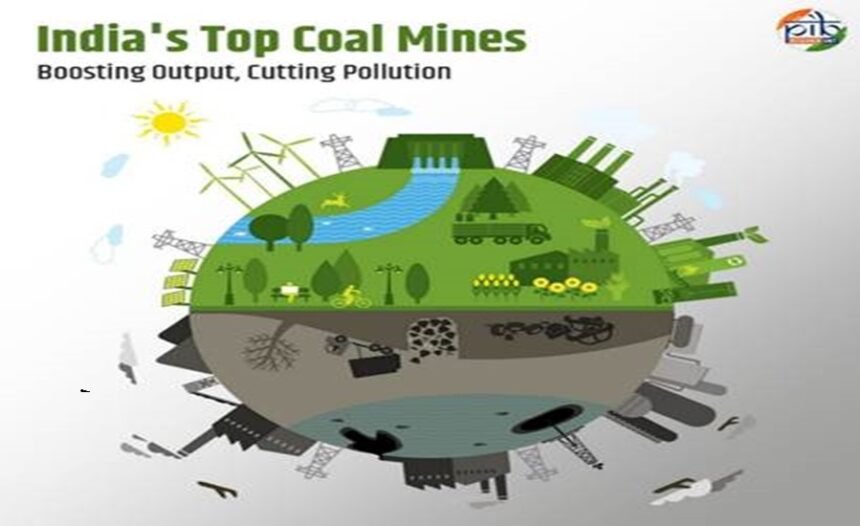
The Government has introduced a range of policy reforms and operational changes to raise domestic coal production, cut down on imports, and strengthen India’s energy security. Union Minister of State for Coal and Mines Satish Chandra Dubey gave these details in a written reply to the Rajya Sabha.
Reforms driving production
The Ministry of Coal has brought in several changes to speed up coal block development. Project implementation is now tracked regularly to keep things on schedule. An amendment to the Mines and Minerals (Development and Regulation) Act, 2021 now allows captive mine owners, apart from those dealing in atomic minerals, to sell as much as half their annual production in the open market once their own needs are covered.
A Single Window Clearance Portal now handles approvals for mining projects more quickly, and a Project Management Unit has been set up to help allottees get their statutory clearances sorted. Commercial coal mining through revenue-sharing auctions started in 2020, with incentives built in for early production and for gasification or liquefaction projects.
Mining rules have loosened considerably. Foreign investors can now put in 100% FDI through the automatic route, upfront payments have dropped, operating conditions are more flexible, and bidding runs on the National Coal Index for transparency. Timelines for developing blocks have shrunk too, from 51 to 40 months for fully explored blocks and from 66 to 52 months for partially explored ones. Prospecting Licences are no longer required for accredited agencies, geological approvals have been simplified and underground mining comes with new incentives.
Mining companies upgrade their operations
Producers have made changes of their own to run more efficiently. Coal India Limited now uses advanced underground methods such as Continuous Miners, Longwall systems and Highwall systems, and has upgraded its opencast operations with high-capacity excavators, dumpers, standardised heavy machinery and surface miners.
Singareni Collieries Company Limited has tightened up how it runs projects and built out its evacuation infrastructure, adding handling plants, crushers, mobile crushers and pre-weigh bins along the way.
Reducing the import bill
A number of measures now push power producers and steelmakers toward domestic coal rather than imports. Power plants can draw their Annual Contracted Quantity up to the full normative requirement, and coking coal linkages under the Non-Regulated Sector auction policy now last 30 years. Supply is also being matched to the full Power Purchase Agreement needs of existing linkage holders in the power sector.
A dedicated sub-sector now exists under NRS linkage auctions for steel producers using coking coal via the WDO route, and a Mission is underway to grow domestic output of coking coal. The Revised SHAKTI Policy, 2025 lets imported power plants and existing Fuel Supply Agreement holders buy extra domestically, while a new CoalSETU window under NRS linkage auctions improves supply of washed coal.
Where commercial mining auctions stand
Commercial mine auctions have been running since June 2020. In that time, 132 coal blocks have been allocated, 23 have Mine Opening Permission, and 15 have started producing. The other 109 blocks are still working through their development timelines under the Coal Mine Development and Production Agreement.
Building in environmental safeguards
Companies and the Government have also put environmental measures in place alongside the production push. Large-scale plantation and bio-reclamation work is underway, mine water is being used for community purposes, and eco-parks are being built on reclaimed land. Extraction, transport and evacuation are increasingly mechanised to bring emissions down, and dust is kept in check with sprinklers, fog cannons, mechanical sweepers, wind barriers and wheel-washing systems.
Blast-free mining technologies and underground mining are getting more attention, alongside scientific mine closure and ecological restoration work. Companies that win commercial mining bids are required to run mechanised operations, keep carbon emissions down, and follow environmentally sound practices that match industry standards.
Key Takeaway: People affected by coal mining projects are compensated either under the Right to Fair Compensation and Transparency in Land Acquisition, Rehabilitation and Resettlement Act, 2013, or through mutually agreed terms under the Coal Bearing Areas (Acquisition and Development) Act, 1957. Eligible Project Affected Families get rehabilitation and resettlement benefits, and district-level committees oversee the process to keep it transparent. Land only changes hands once compensation and rehabilitation benefits have been paid out.
MCQ’s:
1. The Mines and Minerals (Development and Regulation) Amendment Act, 2021 permits captive mine owners to:
A. Export minerals without restrictions.
B. Sell up to 50% of annual production in the open market after meeting captive requirements.
C. Lease mines to foreign companies without approval.
D. Undertake mining without environmental clearance.
2. Commercial mining through revenue-sharing auctions in India was introduced in:
A. 2018
B. 2019
C. 2020
D. 2021
Read more: The Unstoppable Surge: UPI Crosses 55.49 Crore Users in India’s Digital Payment Revolution