
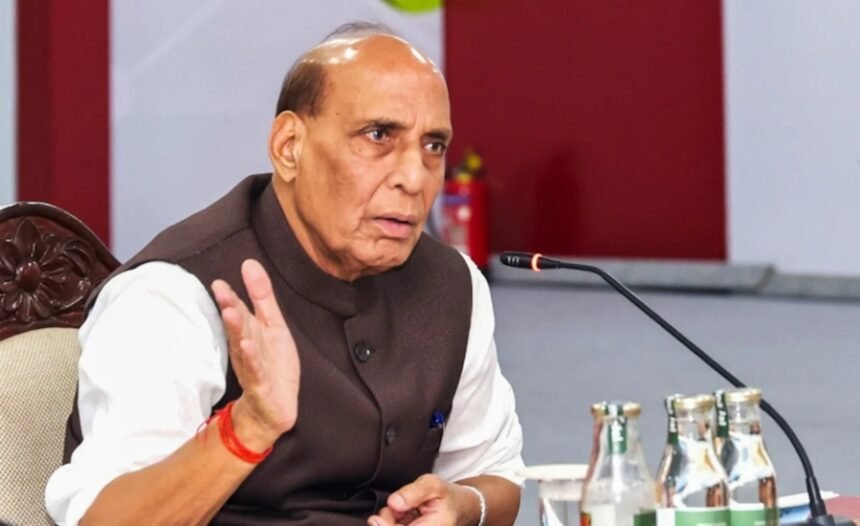
Raksha Mantri Rajnath Singh has rolled out two major policy reforms for the Indian Coast Guard (ICG). One is aimed at bringing gender parity to how officers are inducted and the conditions under which they serve. The other is meant to simplify the administrative process for granting ex-gratia payments to families of personnel who go missing at sea while on duty. The event took place at Kartavya Bhavan-2 in New Delhi on July 28, 2026, and was attended by Defence Secretary Shri Rajesh Kumar Singh, DG ICG Director General Paramesh Sivamani, and several other senior officials.
Raksha Mantri had nothing but praise for the ICG’s track record over the last five decades, and he said he was confident these forward-looking policies would lift both morale and operational efficiency as the force heads toward its Swarnim Jayanti, or Golden Jubilee, in 2027. He also reaffirmed that the Prime Minister Shri Narendra Modi-led Government remains committed to building the ICG into a modern, capable, and future-ready maritime force.
Opening Up Induction and Careers Regardless of Gender
The first of the two policies lays out a comprehensive, women-centric framework that makes officer induction into the ICG gender-neutral. Under this policy, women candidates can now be inducted into both Short Service Appointments (SSA) and Permanent Appointments (PA) on equal footing with their male counterparts. And it isn’t a one-way change either: SSA has now been opened up to male candidates as well.
Career progression gets the same equal-opportunity treatment, starting from the very first stage of ab-initio training. Women officers already serving under PA will be considered for promotion to higher ranks, provided they meet the eligibility criteria. Those currently serving under SSA will get the option to convert their service to PA, again subject to meeting the required conditions. It’s a step the government is framing as part of its broader commitment to Nari Shakti and to ensuring equal opportunity within the country’s maritime security setup.
Easing the Ex-Gratia Process for Families of the Missing
The second reform is squarely about giving relief and administrative ease to the Next of Kin (NoK) of ICG personnel who go missing at sea while on duty, a situation no family should have to face but one the force has had to reckon with. Under the new policy, ICG personnel who go missing at sea on duty can now be declared “presumed dead” for the specific purpose of ex-gratia compensation.
That single change significantly speeds up and simplifies how ex-gratia compensation and terminal benefits reach the NoK. The intent is straightforward: families already dealing with the trauma of losing someone shouldn’t also have to wait through long administrative delays on top of it.
Key Takeaway: The two policy reforms introduced for the Indian Coast Guard mark a significant step toward strengthening both institutional inclusivity and personnel welfare. By making officer induction and career progression gender-neutral through equal access to Short Service and Permanent Appointments, the government aims to promote greater gender parity within the maritime security force.
Simultaneously, the streamlined ex-gratia policy for personnel who go missing at sea seeks to ensure faster financial assistance and terminal benefits for their families by allowing them to be declared “presumed dead” for compensation purposes. Together, these reforms reflect a broader effort to modernize the Coast Guard’s human resource policies while enhancing morale, operational effectiveness, and support for personnel and their dependents.
M.C.Q.
Question 1: Under the new policy reforms announced for the Indian Coast Guard, which of the following statements is correct?
- A. Permanent Appointment is now available only to women officers.
- B. Women officers are eligible only for Short Service Appointment.
- C. Officer induction has been made gender-neutral, with both men and women eligible for Short Service Appointment and Permanent Appointment as per policy.
- D. Permanent Appointment has been abolished for future recruitments.
Question 2: The newly approved ex-gratia policy for Indian Coast Guard personnel primarily seeks to:
- A. Increase the retirement age of Coast Guard personnel.
- B. Provide faster ex-gratia compensation and terminal benefits to the Next of Kin of personnel who go missing at sea while on duty.
- C. Introduce a new pension scheme for all serving officers.
- D. Provide financial assistance only after recovery of the missing personnel’s body.
Read More: India’s Agricultural Infrastructure Boost: Essential Support for Farmers