
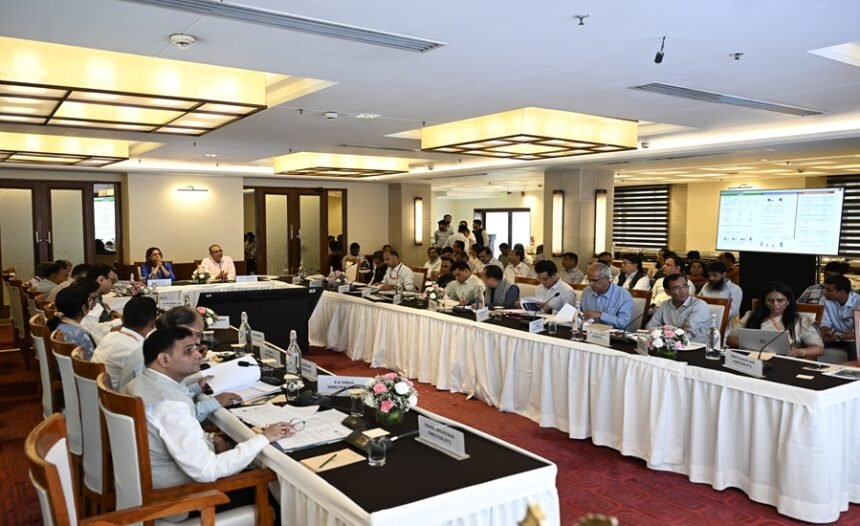
Under the Pradhan Mantri Gram Sadak Yojana (PMGSY) The government has set aside ₹18,907 crore to build 26,474 kilometres of rural roads in FY 2026–27, and other rural connectivity schemes. The figure came out of a high-level review meeting led by Rohit Kansal, Secretary of the Department of Rural Development, who sat down with senior officials from several States to check on how rural road projects are progressing, both physically and financially. It’s the kind of stocktaking exercise that happens periodically, but this one carried extra weight given the scale of the allocation for the coming year.
The meeting covered two things mainly: PMGSY itself, and the Road Connectivity Project for Left Wing Extremism Affected Areas (RCPLWEA). Officials went through where things stand state by state and talked through what needs to happen to get ongoing projects finished on time. With this many States represented, the discussion wasn’t just about broad targets. It also got into the specific bottlenecks holding back individual projects.
On last-mile connectivity, the Ministry told States to speed up work on the habitations still waiting for roads under PMGSY-I and PM-JANMAN. Particular attention is going to Particularly Vulnerable Tribal Group (PVTG) habitations, which need all-weather connectivity. These are often the hardest habitations to reach precisely because they’ve been left unconnected this long, whether due to terrain, remoteness, or the sheer complexity of building there. States were also told to get their Detailed Project Reports (DPRs) moving faster, clear whatever’s holding up execution, and finish pending projects within the deadlines already set. None of this is new territory for PMGSY, but the emphasis this time was on closing out the remaining gaps rather than starting fresh work.
RCPLWEA got its own close look. The Centre pushed for faster execution of sanctioned roads in LWE-affected districts, which means better coordination between the agencies actually doing the building. Roads in these districts tend to carry more than just transport value. They’re tied up with security access and administrative reach, so delays there get watched more closely than delays elsewhere.
Pushing Last-Mile Connectivity and Digital Monitoring
On quality, States were asked to tighten up field inspections and monitoring so the roads actually last, and to stick to construction standards without cutting corners. Roads built fast and built to last aren’t always the same thing, and the review made clear the Ministry wants both. The Ministry also wants every State on the e-MARG platform (Electronic Maintenance of Rural Roads under PMGSY), which tracks maintenance work, performance, and payments in real time. The idea is more transparency and fewer excuses, plus a paper trail that makes it harder for maintenance to quietly slip through the cracks.
Kansal also handed out State-specific instructions: clear the roadblocks each State is facing, push land acquisition and forest clearances along faster, hit project milestones, and keep the lines open between State governments, NRIDA, and the Ministry. The States, for their part, said they’d get the pending work done and keep expanding all-weather roads to the habitations that qualify.
Key Takeaway: ₹18,907 crore is going toward 26,474 km of rural roads in FY 2026–27 under PMGSY. States now need to move faster on last-mile connectivity, tighten quality checks, and get everyone onto e-MARG so the whole process stays transparent and on schedule.
MCQs:
1. The e-MARG platform, recently highlighted in connection with PMGSY, is primarily used for:
A. Monitoring rural road maintenance and performance
B. Digital land record management
C. Online procurement of construction materials
2. The Road Connectivity Project for Left Wing Extremism Affected Areas (RCPLWEA) primarily aims to:
A. Develop smart cities in tribal regions
B. Improve road connectivity in Left Wing Extremism-affected districts
C. Promote rural tourism
D. Build expressways connecting state capitals
Read more: Biodiversity Pays Back: India’s ABS Framework Delivers Rs 145 Crore | Benefit Sharing Success