
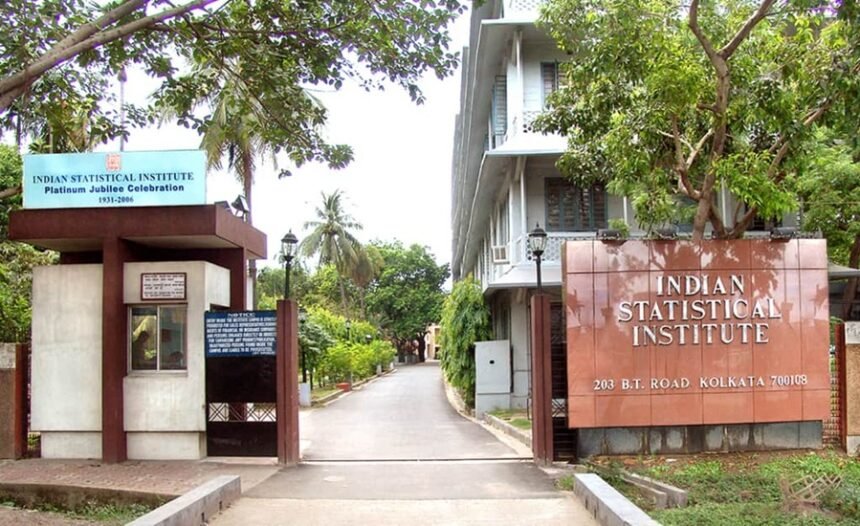
The government is preparing to bring a bill before the Lok Sabha aimed at broadening the mandate of the Indian Statistical Institute and updating its legal footing to match how the field has evolved. The Indian Statistical Institute Bill, 2026 proposes turning the institute into a ‘body corporate’, a move meant to strengthen its governance, push academic excellence and research forward, and let it respond better to emerging needs in statistics and related disciplines.
Governance structure: Visitor, Board and Chairperson
Under the Bill, the President of India will hold the position of Visitor to the institute. The Bill also sets up a Board of Governors, which will function as the institute’s main policy-making and executive body. This board will be led by a chairperson, someone drawn from academia, industry, education, public policy or the statistical sciences, and the board itself will remain answerable to the Central government, as the Bill specifies.
The Academic Council’s role
Alongside the Board, the institute will also have an Academic Council, serving as its principal academic body and headed by the institute’s director. Every full-time professor and full-time faculty member will automatically be part of this council.
Why the old 1959 Act needed replacing
The Indian Statistical Institute Act, 1959 originally recognized the institute as one of national importance and gave it the authority to award degrees and diplomas in statistics. That law was later amended in 1995 to extend this authority to mathematics, quantitative economics, computer science, and any other subjects connected to statistics that the institute might identify over time.
But according to the new Bill, the 1959 Act falls short in several respects, it has only limited provisions covering governance, administration, finance, accountability and day-to-day functioning, and simply isn’t built to handle the demands of today’s academic and research landscape.
Repealing the old law for something more comprehensive
Because of these gaps, the Bill states that the government has decided to repeal the 1959 Act entirely and replace it with comprehensive new legislation. The goal is to formally incorporate the Indian Statistical Institute, already recognized as an institution of national importance, as a body positioned to become a globally recognized centre of excellence in statistical sciences and related fields.
What this means for India’s talent pipeline
The Bill frames this legal overhaul as more than just administrative housekeeping, it’s expected to help build an ecosystem capable of training a new generation of skilled data scientists and statisticians, addressing the significant talent shortage currently facing India’s technology and financial sectors.
Key Takeaway: The proposed Indian Statistical Institute Bill, 2026 seeks to replace the Indian Statistical Institute Act, 1959 with a modern legal framework that incorporates the institute as a body corporate, strengthens its governance through a Board of Governors and an Academic Council, and enhances its administrative, financial, and academic autonomy.
While retaining the institute’s status as an institution of national importance, the Bill aims to expand its capacity for high-quality education and research in statistics and allied disciplines, foster innovation, and develop a skilled workforce in data science and statistical sciences to meet the growing demands of India’s technology, finance, and research sectors.
M.C.Q.
Question 1: The proposed Indian Statistical Institute Bill, 2026 seeks to replace which existing legislation?
- A. Indian Statistical Commission Act, 1961
- B. Indian Statistical Institute Act, 1959
- C. National Statistical Commission Act, 2005
- D. Collection of Statistics Act, 2008
Question 2: According to the proposed Indian Statistical Institute Bill, 2026, who will serve as the Visitor of the Indian Statistical Institute?
- A. Prime Minister of India
- B. Minister of Education
- C. President of India
- D. Vice President of India
Read More: SC/ST Atrocities Act: UP’s Remarkable ₹747 Crore Boost