
The Department of Atomic Energy is pushing peaceful uses of nuclear technology well beyond power plants. Two sectors are seeing the most action right now: medicine and agriculture.
Radioisotopes Reach Hospitals Across India
Nuclear medicine has become a mainstay of cancer diagnosis and treatment, and radioisotopes sit at the center of that work. The Bhabha Atomic Research Centre (BARC), a unit of DAE, produces radioisotopes and ready-to-use radiopharmaceuticals on an ongoing basis. From there, the Board of Radiation & Isotope Technology (BRIT), DAE’s industrial arm, gets them out to nuclear medicine centres around the country, so hospitals aren’t left waiting on supply. DAE has also been building up its own capacity to make radiopharmaceuticals domestically, aiming to bring down costs compared to imported versions.
Some of these radioisotopes come from research reactors and cyclotrons, and others are recovered during the reprocessing of high-level liquid waste (HLLW). That includes Ruthenium-106, Caesium-137, and Strontium-90, the last of which is milked into Yttrium-90 for further use.
Clinical Centres Delivering Direct Patient Care
DAE doesn’t just supply materials. It runs its own clinical services too, through the Radiation Medicine Centre (RMC) in Mumbai and the Radiation Medicine Research Centre (RMRC) in Kolkata, both offering diagnostic and therapeutic cancer care. RMRC Kolkata is a newer addition, a modern nuclear medicine facility set up in the Eastern Region under BARC. It’s been running since January 2024, giving patients from the Eastern and North-Eastern states access to advanced nuclear medicine care that’s also more affordable.
New Ligands Target Cancer Treatment and Diagnosis
Over recent years, DAE has been developing its own nuclear medicine ligands and targeted therapeutics as part of a broader national push against cancer. One example is PSMA-617, a peptide-based ligand used in prostate cancer therapy. The version developed in-house, 177Lu-PSMA-617, now goes out to hospitals nationwide through BRIT on a regular basis. More recently, DAE came up with PSMA-11, meant to replace imports in producing 68Ga-PSMA11, which is used to diagnose prostate cancer.
Other radioactive pharmaceuticals in use include Ga68 DOTANOC, Ga68 FAPI, and 18F FDG. Together they help evaluate a wide range of cancers: prostate cancer, neuroendocrine tumors, mucinous and signet ring GI cancers, lung carcinoma, oesophageal carcinoma, breast cancer, and lymphoma.
Cold Kits and Cardiac Imaging Round Out the Toolkit
DAE also manufactures and supplies around 18 different cold kits used to prepare Technetium-99m radiopharmaceuticals. These are widely used for catching diseases early, across nearly every major organ system, cancers included. The kits allow hospitals to formulate high-quality diagnostic radiopharmaceuticals that support early detection, staging, and ongoing monitoring across a broad range of conditions.
On top of that, DAE has worked out a synthesis protocol for an affordable version of sesta-MIBI, used as 99mTc-MIBI in cardiac imaging.
Radiation-Bred Crops Reshape Indian Agriculture
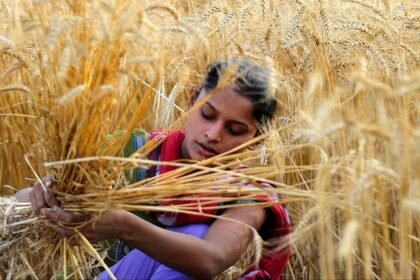
The agriculture side of DAE’s work looks different but follows a similar logic: using nuclear science to solve practical problems. Through radiation-induced mutagenesis combined with cross breeding, DAE has developed 72 improved crop varieties, working alongside ICAR and various State Agricultural Universities. These have been released and notified for commercial cultivation and span a long list of crops, including rice, mustard, sesame, groundnut, urad bean, mung bean, pigeon pea, sorghum, cowpea, wheat, soybean, sunflower, banana, linseed, and jute.
The traits bred into these varieties vary but tend to focus on what farmers actually need: higher yield, better seed size and quality, earlier maturity, and resilience to drought, heat, and salinity, along with disease resistance. A number of these varieties have caught on widely and are now grown extensively across the country.
Food Irradiation Extends Shelf Life, Cuts Waste
DAE is also pushing radiation technology for preserving food and farm produce. That means writing standard operating procedures for irradiating agricultural commodities, setting standards and guidelines for food irradiation, building better radiation facilities, and handing off these technologies to private entrepreneurs so they can commercialize them.
The payoff: longer shelf life for perishable produce, fewer post-harvest losses, chemical-free preservation of grains and spices, and an easier path to meeting the phytosanitary requirements that come with exporting. So far, 42 food irradiation facilities have been commissioned across the country, spanning both government and private sectors.
Cobalt and Caesium Serve Different Purposes
Cobalt-60 based irradiators handle sterilisation of medical products and extend the shelf life of agricultural and marine products. Caesium, meanwhile, is used specifically in blood irradiators for blood irradiation. DAE makes its technologies available for transfer to private entrepreneurs at a nominal fee, on a non-exclusive basis.
To push adoption further, the government announced incentives in 2024-25 for setting up multiproduct food irradiation units under the Integrated Cold Chain & Value Addition Infrastructure component of the Pradhan Mantri Kisan Sampada Yojana (PMKSY) scheme, rolling this out nationwide.
Key Takeaway: The Department of Atomic Energy’s expanding use of nuclear technology demonstrates how atomic science is increasingly contributing beyond electricity generation, supporting both public health and agricultural development. Through institutions such as BARC and BRIT, India is strengthening domestic capabilities in producing radioisotopes, radiopharmaceuticals, and advanced cancer diagnostics while reducing dependence on imports.
At the same time, radiation-based crop improvement, food irradiation, and sterilisation technologies are enhancing farm productivity, reducing post-harvest losses, improving food preservation, and supporting exports. Backed by government initiatives such as the Pradhan Mantri Kisan Sampada Yojana, these applications highlight the growing role of peaceful nuclear technology in advancing healthcare, food security, agricultural resilience, and scientific self-reliance, making them significant developments in India’s science, technology, and development landscape.
M.C.Q.
Question 1: Which organisation is responsible for distributing radioisotopes and radiopharmaceuticals produced by the Department of Atomic Energy to hospitals across India?
- A. Indian Council of Medical Research (ICMR)
- B. Board of Radiation & Isotope Technology (BRIT)
- C. Atomic Energy Regulatory Board (AERB)
- D. Nuclear Power Corporation of India Limited (NPCIL)
Question 2: Radiation-induced mutagenesis, frequently seen in current affairs related to Indian agriculture, is primarily used to:
- A. Produce genetically modified crops by inserting foreign genes
- B. Develop improved crop varieties with desirable traits such as higher yield and stress tolerance
- C. Sterilise agricultural land before cultivation
- D. Increase the radioactive content of crops for preservation
Read More: Tiger Day Celebration by NTCA: India’s Remarkable New Milestone