
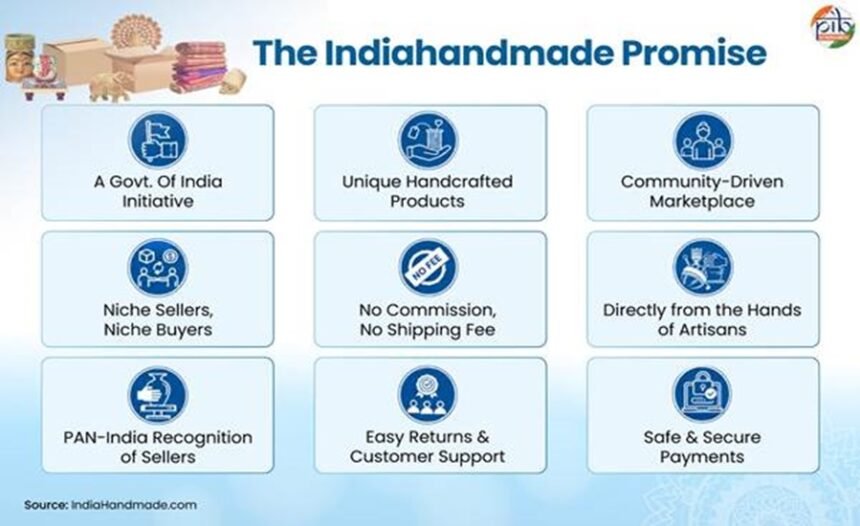
Indiahandmade is an e-commerce platform built specifically for India’s handloom and handicraft sector, connecting artisans and weavers directly with buyers instead of routing everything through middlemen. It’s part of the Digital India initiative, and its focus includes GI-tagged products and ODOP items, crafts tied to specific districts and regions, which gives the platform a cultural preservation angle on top of the commercial one.
The scale of the sector it serves
India has close to 64.66 lakh handloom and handicraft artisans, and women make up a large share of that workforce, 71% of handloom weavers and 64% of artisans overall as of August 2025. That’s not a niche sector; it’s a major source of rural employment and one where women’s participation is already high, which is part of why getting artisans online has become a policy priority. Indiahandmade, launched in 2023 by the Digital India Corporation under the Ministry of Textiles, is meant to address that directly, giving craftspeople a dedicated marketplace rather than leaving them to compete on generic platforms.
What the platform is trying to do
At the core, it’s about cutting out layers between the artisan and the buyer, better prices for the person actually making the product, less dependence on middlemen, more visibility for regional crafts that otherwise stay local. The stated goals include improving income, supporting financial inclusion, and preserving traditional skills, alongside the more straightforward job of just getting more people online and selling.
A few things stand out functionally. Artisans and producer groups can sell directly, which theoretically means better returns on their work. The platform gives them an online presence and a customer base well beyond whatever local market they’d otherwise be limited to. And by showcasing authentic handmade work, it’s positioned as a way to keep traditional skills alive for another generation rather than let them fade out as younger artisans move to other work.
What’s actually for sale
The catalogue spans apparel, home décor, furnishings, paintings, furniture, religious items, stationery, musical instruments, jewellery, bags, and footwear, covering both everyday handcrafted goods and region-specific traditional items.
GI-tagged products get particular emphasis. These are goods whose qualities are tied to a specific place, Aipan artwork, pure Pashmina shawls, Dokra crafts, Mundu products among them, and putting them on a national platform helps preserve that regional identity while giving artisans a bigger market than they’d reach locally.
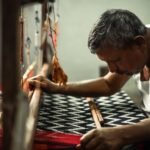
ODOP products follow a similar logic. The initiative identifies one distinctive product per district to encourage balanced development, and Indiahandmade features things like Tangail sarees, Banarasi silk, Ikat textiles, Tussar silk sarees, Chanderi silk, and terracotta work, giving district-specific crafts a shot at national recognition they wouldn’t get otherwise.
Making it work for both sides
For buyers, there’s secure payment, purchase protection, support services, free shipping, and pricing meant to stay competitive for genuinely handmade goods, all aimed at building the kind of trust that gets people buying handcrafted items online rather than sticking to mass-produced alternatives.
For sellers, onboarding is kept simple. One detail worth noting: a lot of rural artisans operate outside the formal tax system, so the platform lets sellers without GST registration join using an Enrolment ID instead, though they’re then limited to selling within their own state. It’s a practical compromise that lowers the barrier to entry for small-scale artisans and first-time online sellers who’d otherwise be shut out entirely.
A few examples from the platform
Santarms sells wooden décor, scented candles, terracotta diyas, marble idols, and handloom sarees. Dastkar Craft works with over 500 artisans producing cane and bamboo goods that blend traditional technique with more contemporary design, selling both domestically and abroad. Villages Craft focuses on everyday handloom items, cotton towels, gamchas, bedsheets, showing that traditional weaving can still support rural livelihoods through ordinary, useful products rather than only decorative ones.
Key Takeaway: Indiahandmade fits into the broader Digital India and Atmanirbhar Bharat push, treating handicrafts as both cultural heritage and a real economic sector worth building digital infrastructure around. The plan is to onboard more than 60 lakh artisans, which would make it one of the largest platforms of its kind dedicated purely to handmade goods. Whether it gets there depends on how well the onboarding and trust-building features hold up at that scale, but the early set of participating enterprises suggests the model, connecting artisans directly to buyers while keeping the craft itself intact, is at least functioning as intended so far.
MCQs:
1. Indiahandmade was launched in which year?
A) 2021
B) 2022
C) 2023
D) 2024
2. Indiahandmade was developed by the
A) Ministry of MSME
B) Ministry of Commerce and Industry
C) Digital India Corporation under the Ministry of Textiles
D) NITI Aayog