
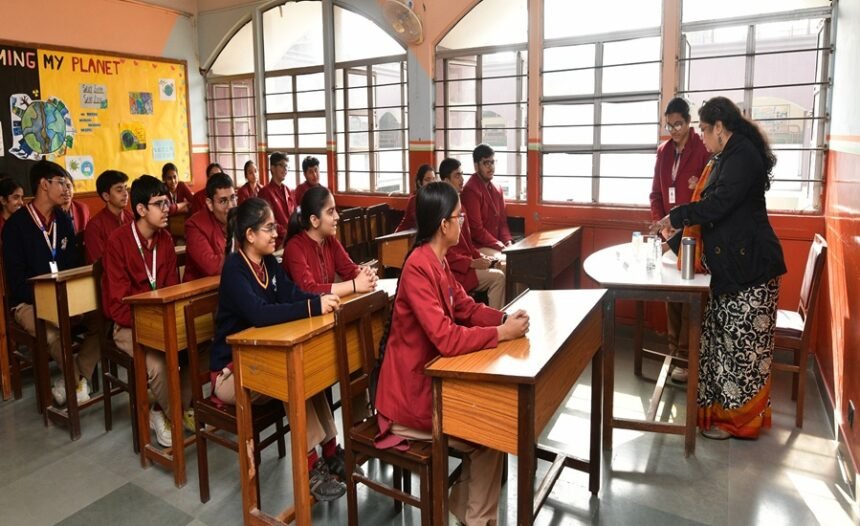
Education sits on the Concurrent List of the Indian Constitution, which means most schools fall under the administrative control of State Governments and Union Territory administrations rather than the Centre alone. Even so, recognizing how central education is to national development, the National Education Policy, (NEP 2020) was brought in, and it puts real weight on the all-round development of learners, including strengthening health, wellness and environmental awareness within schools.
Building on NEP 2020, the Ministry of Education (MoE) has made health education, hygiene practices and environmental consciousness a priority for school children, working through schemes like Samagra Shiksha, Pradhan Mantri Poshan Shakti Nirman (PM POSHAN), the School Health and Wellness Programme (SHWP), Rashtriya Bal Swasthya Karyakram (RBSK) and Eco Clubs under Mission LiFE. On top of this, the National Council of Educational Research and Training (NCERT) has woven themes around health, nutrition, hygiene, air pollution and environmental sustainability into school curricula, textbooks and learning material, calibrated to be age-appropriate at each stage of schooling.
Nutrition and hygiene through PM POSHAN
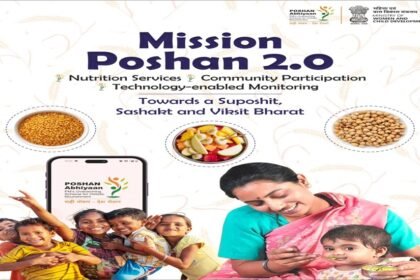
The Pradhan Mantri Poshan Shakti Nirman Scheme is a centrally sponsored, rights-based programme run jointly with States and UTs, and it’s one of the government’s flagship efforts in this space. Under it, roughly 10.23 crore students studying in Bal Vatika through Class VIII, across about 10.33 lakh government and government-aided schools, get healthy, hot, freshly cooked meals every single school day.
Beyond just feeding children, the scheme also builds in education, teaching students why a healthy, balanced diet matters, helping them recognize junk food, explaining nutritional fortification, and promoting sanitation habits like handwashing. School Nutrition Gardens (SNGs) are part of this too, giving students hands-on exposure to where food actually comes from.
Eco Clubs and environmental awareness
Through the Samagra Shiksha scheme, the MoE helps States and UTs set up Eco Clubs for Mission LiFE in schools nationwide, aimed at getting students thinking seriously about environmental and climate concerns and building environment-friendly habits from an early age. These clubs aren’t just theoretical, students actually get out and do things: planting saplings, going on nature walks, and taking part in cleanliness drives.
Sports and physical education woven into learning
Sports and physical education are getting a stronger push in schools too, through several policy and programme moves tied directly to NEP 2020. The policy treats sports as core to the curriculum rather than an extra, seeing it as essential for physical fitness, teamwork and building habits that last a lifetime. The National Curriculum Framework (NCF) puts this into practice by weaving sports-based teaching methods across every stage of schooling, with a particular focus on yoga.
Samagra Shiksha now has a dedicated Sports and Physical Education component too, meant to drive sports activities, fitness programmes and yoga in government schools. The underlying goal is full holistic development, getting students fit not just physically but mentally, psychologically, socially and emotionally as well.
New textbooks bring sports and yoga into classrooms
Acting on recommendations from NEP 2020 and the NCF-SE 2023, NCERT has produced dedicated Sports and Physical Education textbooks tailored to different school stages, with yoga given special attention throughout. These include Khel-Yoga for the Preparatory Stage (Grades III-V), Khel Yatra for the Middle Stage (Grades VI-VIII), and Khel-Praveen for the Secondary Stage (Grade IX). Each one introduces students to physical education concepts, Yoga for Daily Life, and basic Yog Sadhana in a way suited to their age group. These books are already being used in classrooms and are making a real contribution to students’ overall physical, mental and socio-emotional wellbeing.
National campaigns keeping students active
Several national-level initiatives have also been rolled out to encourage sports, physical education and fitness among school-going children. Large-scale participation events, the International Day of Yoga, National Yoga Olympiad, Fit India Movement, Khelo India sports events and National Sports Day, all help push active lifestyles in schools. On top of that, the CBSE Health and Physical Education (HPE) programme has made sports compulsory across all classes, building structured physical activity, including yoga, into the school curriculum for every student.
Two ministries, one wellness programme
The Ministry of Health and Family Welfare has shared that it’s been running the School Health and Wellness Programme jointly with the Ministry of Education since 2020. Under this initiative, two teachers per school are trained as Health and Wellness Ambassadors, and they run regular sessions covering 11 themes, ranging from nutrition and health and sanitation to growing up healthy and adopting healthier lifestyles overall.
Environmental education beyond the classroom
The Ministry of Environment, Forest and Climate Change has explained that it runs the Environment Education Programme (EEP) as part of the broader Central Sector Scheme on Environment Education, Awareness, Research and Skill Development (EEARSD). This is designed to complement what the Ministry of Education is already doing formally, adding non-formal environmental education through a range of teaching approaches. The idea is to get children and youth genuinely engaged with environmental issues and nudge them toward sustainable lifestyle choices, using workshops, projects, exhibitions, campaigns, competitions, nature camps and summer programmes.
The programme is built to add real-world, hands-on exposure to what students already learn in class. Its activities line up with the seven themes under Mission LiFE, including “Adopt Sustainable Food System” and “Adopt Healthy Lifestyle.” It runs through designated State and UT-level implementing agencies, reaching children and youth via eco-clubs set up in schools and colleges, with an emphasis on experiential, hands-on learning rather than lectures.
Some of the specific activities under EEP include Sustainable Lifestyle Workshops, Zero Waste Initiatives, promoting alternatives to single-use plastic, Millet Food Fests, cleanliness and beach-cleaning drives, setting up kitchen, medicinal and herbal gardens, teaching segregation of dry and wet waste, vermicomposting, and yoga and trail walks during nature camps. Thematic campaigns also mark various environmental observance days throughout the year.
Key Takeaway: The implementation of the National Education Policy, (NEP 2020) reflects a comprehensive approach to holistic education by integrating health, nutrition, hygiene, environmental awareness, sports, yoga, and physical fitness into the school ecosystem through coordinated efforts of multiple ministries and flagship initiatives such as Samagra Shiksha, PM POSHAN, the School Health and Wellness Programme, Rashtriya Bal Swasthya Karyakram, Mission LiFE, and the Environment Education Programme.
Supported by revised NCERT curricula, dedicated sports and yoga textbooks, Eco Clubs, and experiential learning activities, these initiatives aim to foster well-rounded, health-conscious, environmentally responsible, and physically active students while strengthening the overall quality and inclusiveness of school education in India.
M.C.Q.
Question 1: Education is placed under which List of the Constitution of India?
- A. Union List
- B. State List
- C. Concurrent List
- D. Residuary List
Question 2: Which flagship scheme provides hot cooked meals to children from Bal Vatika to Class VIII in Government and Government-aided schools?
- A. PM-KISAN
- B. Pradhan Mantri Poshan Shakti Nirman (PM POSHAN)
- C. Samagra Shiksha
- D. Rashtriya Bal Swasthya Karyakram (RBSK)
Read More: Cross-Border E-Commerce Exports: A Powerful New EOR Framework