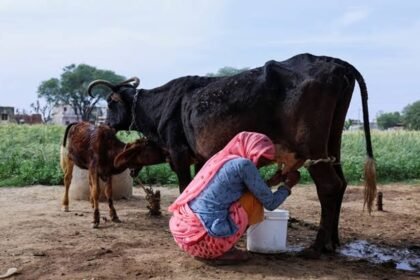

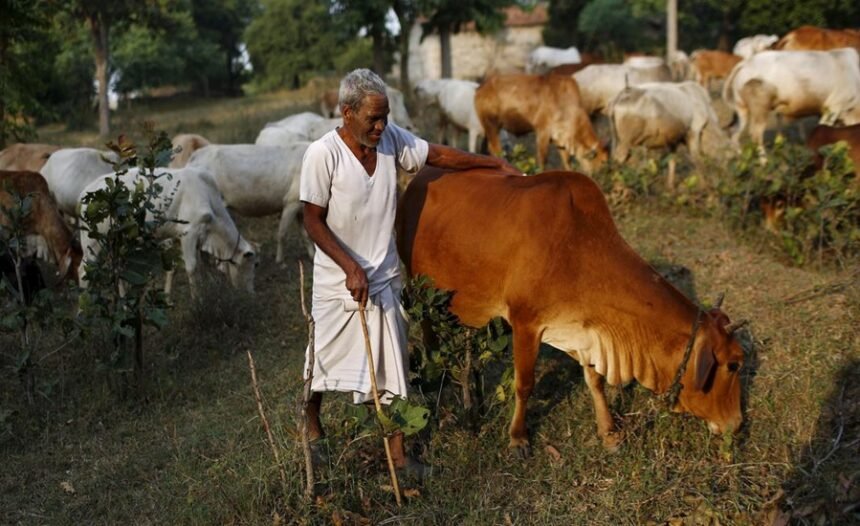
Union Minister for Fisheries, Animal Husbandry and Dairying, Rajiv Ranjan Singh alias Lalan Singh, told the Rajya Sabha that the Government of India is running a set of targeted initiatives to build up livestock development, boost dairy productivity, improve animal health, and support sustainable livelihoods in rural areas nationwide.
This work is carried out through flagship schemes, the National Livestock Mission (NLM), the Animal Husbandry Infrastructure Development Fund (AHIDF), the Rashtriya Gokul Mission (RGM) and the Livestock Health & Disease Control Programme (LHDCP), which together cover infrastructure building, scientific breeding, disease control, fodder development and entrepreneurship support across the sector.
Supporting pig farming in Assam
According to the Minister, entrepreneurs in Assam are getting backing under both the National Livestock Mission and the Animal Husbandry Infrastructure Development Fund to set up modern pig breeding farms and pork processing facilities. Over the past three years, ₹4.98 crore in subsidies has gone out to 50 livestock projects, 23 of them pig breeding farms, under NLM’s Entrepreneurship Development Programme. Separately, AHIDF has released ₹1.44 crore as interest subvention across eight projects, including one pig breeding farm.
On top of this, ₹41.67 crore has gone toward bovine genetic improvement under the Rashtriya Gokul Mission, ₹124.29 crore has been released under the Livestock Health and Disease Control Programme, and ₹7.74 crore has funded various livestock development activities under the National Livestock Mission, all during 2024-25 and 2025-26.
Scientific breeding and disease control in pigs
To push scientific pig breeding forward, the government has sanctioned ₹1.80 crore to set up a Pig Semen Collection and Processing Laboratory in Assam, aimed at expanding artificial insemination and genetic improvement in the state. The Department has also brought out a publication titled “Good Husbandry Practices in Pig Farming” to guide farmers toward more scientific methods. Disease control hasn’t been neglected either, with 9,92,863 Classical Swine Fever vaccinations administered free of cost across the state, work that supports disease prevention while also opening up employment and export opportunities.
Rising milk output and productivity
Turning to dairy, the Minister noted that India’s average bovine milk productivity has climbed from 1,648 kg per animal per year in 2014-15 to 2,251 kg in 2024-25. Over that same stretch, national milk production has jumped 70 percent, going from 146 million metric tonnes to 248 million metric tonnes.
Tackling fodder shortages
To deal with fodder shortages, the government is running several interventions through the National Livestock Mission, covering quality fodder seed production and support for hay, silage and Total Mixed Ration (TMR) infrastructure. Over the last five years, ₹1,152.40 crore has been released for this, producing 1.6 lakh tonnes of quality fodder seed in the process. Under NLM-EDP, 204 fodder-related projects have been approved, while AHIDF has backed 174 animal feed plants with investments totalling ₹3,602.47 crore.
Building fodder infrastructure and farmer training
The National Dairy Development Board has set up 100 dedicated Fodder-Plus Farmer Producer Organisations, while ICAR’s Indian Grassland and Fodder Research Institute has developed high-yielding forage varieties, drawn up state-specific fodder development plans, and trained more than 10 lakh farmers.
The government has also issued heatwave management guidelines for States and Union Territories to follow, and continues to encourage indigenous cattle breeds that are naturally better suited to withstand high temperatures. Farmers also get digital advisory support through the 1962 Farmers App under Bharat Pashudhan, which helps them apply scientific ration balancing on their own farms.
Disease control support in Andhra Pradesh
Responding to a separate question on Andhra Pradesh, the Minister said that under the National Animal Disease Control Programme, run as part of the broader Livestock Health & Disease Control Programme, the Centre provides 100 percent Central assistance for vaccinating livestock against Foot and Mouth Disease (FMD) and Brucellosis.
Key Takeaway: The government’s livestock development strategy is being implemented through an integrated set of flagship schemes that focus on scientific breeding, animal health, dairy productivity, fodder security, infrastructure creation, and rural entrepreneurship.
From supporting modern pig farming and disease control in Assam to providing fully funded vaccination against Foot and Mouth Disease and Brucellosis, improving indigenous breeds, strengthening fodder availability, and driving sustained growth in milk production, these initiatives aim to enhance livestock productivity, improve farmers’ incomes, ensure food and nutritional security, and promote the long-term sustainability and competitiveness of India’s animal husbandry sector.
M.C.Q.
Question 1: Which flagship scheme of the Government of India primarily focuses on the genetic improvement and conservation of indigenous bovine breeds?
- A. National Livestock Mission
- B. Rashtriya Gokul Mission
- C. Livestock Health & Disease Control Programme
- D. PM Matsya Sampada Yojana
Question 2: Under the National Animal Disease Control Programme (NADCP), the Central Government provides 100% Central Assistance for vaccination against which of the following diseases?
- A. Lumpy Skin Disease and Anthrax
- B. Foot and Mouth Disease (FMD) and Brucellosis
- C. Classical Swine Fever and Peste des Petits Ruminants
- D. Avian Influenza and Rabies
Read More: NEP 2020’s Winning Push for Holistic School Wellness