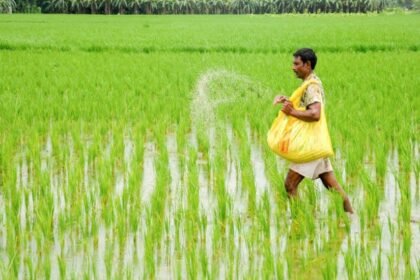

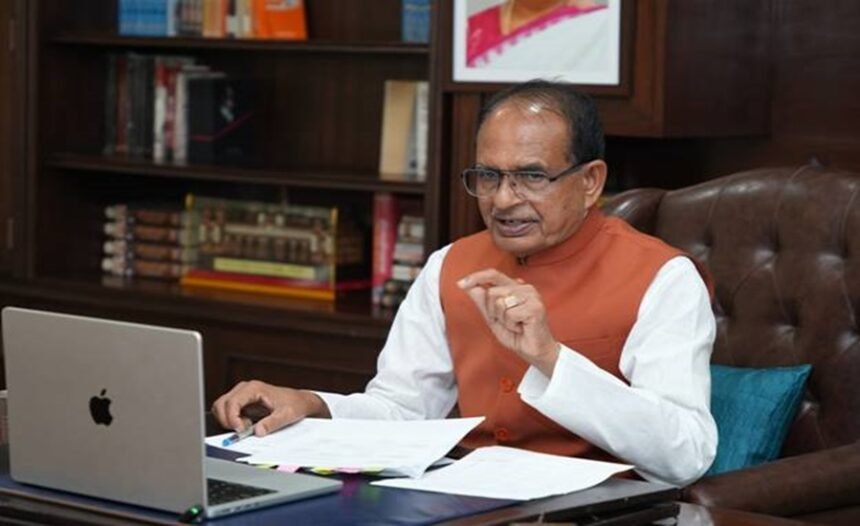
The Centre has cleared large-scale procurement of pulses and oilseeds under the Price Support Scheme (PSS) for Uttar Pradesh, Gujarat, Tamil Nadu and Haryana, aiming to get farmers fair prices and keep them from having to sell at a loss during periods of market weakness. Union Agriculture and Farmers Welfare Minister Shivraj Singh Chouhan approved the move during a video conference with state officials on June 18, 2026, signing off on procurement plans covering three separate crop seasons across the four states.
Uttar Pradesh gets the largest share
Uttar Pradesh came out as the biggest beneficiary this round, by a wide margin under the Price Support Scheme (PSS) . For the Summer 2026 season, the Centre approved procurement of 48,298 metric tonnes of moong, 97,970 tonnes of urad, and 41,718 tonnes of groundnut. These three crops together make up a sizeable chunk of the state’s pulse and oilseed output, and the scale of this approval reflects that. Altogether, the procurement at Minimum Support Price works out to more than ₹1,490 crore, a substantial boost for pulse and oilseed growers in the state and easily the largest financial commitment among the four states covered in this round.
Gujarat cleared for 18,250 tonnes of moong
Gujarat got approval to procure 18,250 tonnes of moong under the Price Support Scheme for the Summer 2026 season. The purchase, at MSP rates, is worth more than ₹160 crore. For moong growers in the state, this gives some assurance that their produce will fetch a guaranteed floor price rather than being left to the mercy of open market rates, which can dip sharply during peak harvest when supply is high.
Tamil Nadu’s limit raised slightly
Under (PSS) in Tamil Nadu, the Centre raised the approved moong procurement for the Rabi Marketing Season 2025-26 from 885 to 990 tonnes, an increase of 105 tonnes. It’s a modest revision compared to the numbers approved for Uttar Pradesh and Gujarat, but it still matters to the farmers it covers. That bump takes the total MSP value to around ₹8.68 crore for the state’s moong growers, money that flows directly to farmers who might otherwise have had to accept lower prices for the unprocured surplus.
Haryana gets MSP backing too
The Price Support Scheme (PSS) will enable Haryana farmers to see 2,115 tonnes of moong procured during the Summer 2026 season, worth more than ₹18 crore at MSP rates. Though smaller in scale than the approvals for the other three states, this procurement is meant to give Haryana’s moong growers both price protection and a measure of income security heading into the next planting cycle.
Key Takeaway: The Price Support Scheme sits at the center of the government’s efforts to intervene in pulses and oilseed markets when prices come under pressure. Whenever prices dip below the notified MSP, designated agencies step in and buy directly from farmers, rather than leaving them to negotiate with traders in a falling market.
These latest approvals are meant to guarantee farmers a fair return on their harvest, cut their exposure to unpredictable price swings, and push more farmers toward growing pulses and oilseeds, which in turn strengthens domestic supply of these crops over time. Across all four states, the move is expected to deliver timely relief to farmers during the current procurement seasons, while also reinforcing the broader government commitment to keeping MSP operations running smoothly for these key agricultural commodities.
MCQs:
1. The recent procurement approval under the Price Support Scheme (PSS) covered which group of crops?
A. Cereals and sugarcane
B. Fruits and vegetables
C. Pulses and oilseeds
D. Cotton and jute
2. The procurement approvals were announced by:
A. Narendra Modi
B. Nirmala Sitharaman
C. Shivraj Singh Chouhan
D. Piyush Goyal
Read more: PM-KISAN 23rd Instalment – ₹18,880 Crore Direct Benefit Transfer