
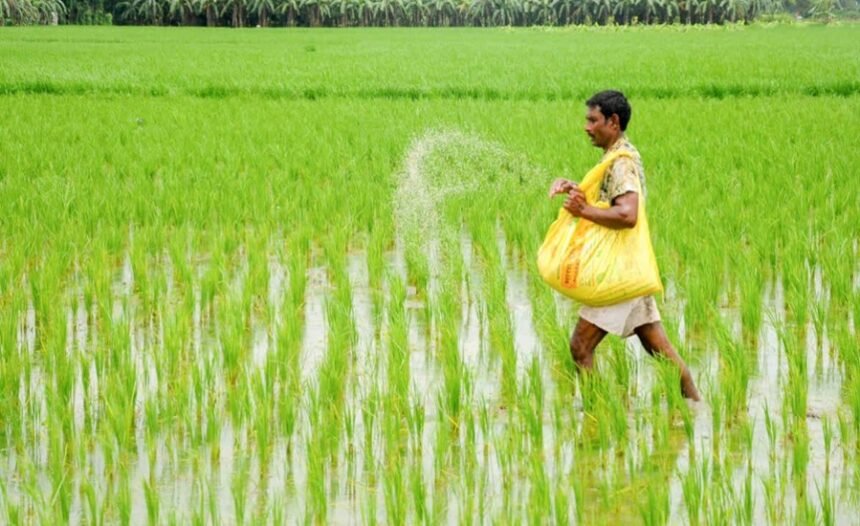
The Government of India says fertilizer stocks are holding up well for the Kharif 2026 season, the result of planning things out ahead of time, allocating supply carefully, and keeping a close eye on how it all moves. Urea, DAP, MOP and NPKS, the fertilizers farmers rely on most, have stayed available across every state and Union Territory.
Planning starts months before the season does
Before each cropping season gets underway, the Department of Agriculture & Farmers Welfare sits down with state governments to work out what each state will need and when. Those numbers feed into monthly supply plans drawn up by the Department of Fertilizers, and the actual movement of fertilizer gets tracked through the Integrated Fertilizer Management System. State Agriculture Departments also hold weekly check-ins to catch and fix supply issues before they become bigger problems. Once fertilizer reaches a state, distribution from there is up to that state government.
Looking at figures from April 1 to July 21, 2026, supply at the national level outpaced both what was projected and what actually sold, which suggests urea, DAP, MOP and NPKS are all in comfortable supply this season.
Subsidies designed to keep prices manageable
The Nutrient Based Subsidy Scheme has been running since April 2010. It pays manufacturers and importers subsidies on phosphatic and potassic fertilizers according to their nutrient content, even though retail prices themselves move with the market. These rates get adjusted periodically to reflect changes in global fertilizer and raw material costs, the point being to keep fertilizer within reach for farmers.
DAP has received particular focus this year. The government has held the retail price at ₹1,350 per 50 kg bag through special support during Kharif 2026. Beyond the standard NBS subsidy, manufacturers also get ₹3,500 per metric tonne extra, meant to cover transport, other running costs, GST, and a reasonable margin. That support extends to DAP made in India and imported DAP alike, plus imported Triple Super Phosphate, and it’s helped keep prices from swinging too much despite unpredictable global markets.
Soil Health Cards guide farmers toward balanced use
Launched in 2014-15, the Soil Health & Fertility Scheme hands out Soil Health Cards built on actual lab testing of soil samples, covering pH, organic carbon, nitrogen, phosphorus, potassium, sulphur, and key micronutrients. The goal is to help farmers use fertilizer more precisely rather than by habit.
More than 26.09 crore of these cards have been issued so far. Alongside that, the scheme has set up 1,020 mini soil labs in schools, put out ₹2,153.29 crore in funding, run over 93,000 training programmes for farmers, organised 6.8 lakh field demonstrations, held 7,425 awareness drives, and pushed micronutrient application across 13.51 lakh hectares.
Evidence of impact, and room to improve
Reviews by the National Productivity Council and MANAGE found that farmers who followed their Soil Health Card recommendations used 8 to 10% less chemical fertilizer, spent 4 to 10% less on cultivation, and often saw yields rise by 5 to 6%. Crops like paddy and cotton in particular needed less urea and DAP once nutrient use became more balanced.
Key Takeaway: NITI Aayog also weighed in with its own evaluation, noting the Nutrient Based Subsidy Scheme’s strengths in encouraging balanced fertilization and widening coverage. It did flag a few areas for improvement too: bringing urea into the NBS system, cutting down on procedural complexity, relying less on imports, and making fertilizer more affordable for small and marginal farmers.
Union Minister for Chemicals and Fertilizers Jagat Prakash Nadda provided this information in a written reply to the Lok Sabha.
MCQ’s :
1. The Nutrient Based Subsidy (NBS) Scheme for phosphatic and potassic fertilizers was launched in:
A. 2008
B. 2010
C. 2012
D. 2014
2. The primary objective of the Soil Health Card Scheme is to:
A. Provide crop insurance to farmers.
B. Promote balanced and scientific use of fertilizers based on soil testing.
C. Supply free fertilizers to all farmers.
D. Monitor agricultural exports.
Read more: India Services Exports Explode to $421.3B, Powered by Telecom & IT Boom