
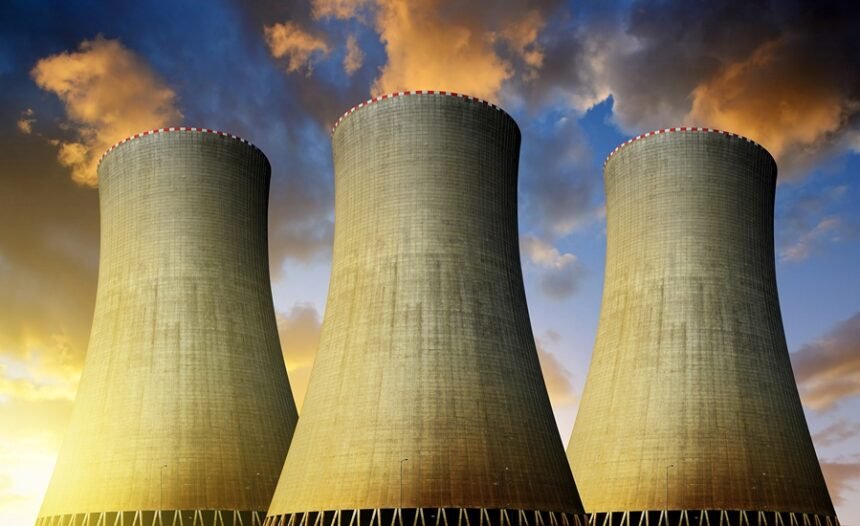
Nuclear power plants in India typically generate radioactive solid waste, including whatever is produced during their operational years and later during decommissioning, at a rate that stays within 0.15 cubic metres per year per MW. Whatever quantity gets disposed of, along with where it’s disposed, is regularly logged and filed with the Atomic Energy Regulatory Board (AERB).
A Legal Framework Built From the Start
Managing nuclear waste safely hasn’t been an afterthought; it’s been a priority since India’s nuclear energy programme first began. That commitment is codified in the Atomic Energy (Safe Disposal of Radioactive Wastes) Rules, 1987, which lays out the legal requirements for handling and disposing of radioactive waste safely.
Under these Rules, any facility generating radioactive waste needs an Authorization from AERB before it can discharge radioactive effluents, and that authorization spells out exactly how much waste, and at what activity level, the facility is permitted to release through approved routes. The discharge limits AERB sets aren’t arbitrary either; they’re built on internationally recognized norms and safe practices. Every step of handling, treating, storing, and disposing of the waste has to follow AERB’s detailed procedures and guidelines.
The Guiding Philosophy: Nothing Released Without Clearance
The underlying approach to waste management is straightforward: no waste, in any physical form, gets released or disposed of into the environment unless it has first been cleared, exempted, or excluded under the regulations. A full, structured system exists to manage radioactive waste generated both by nuclear power plants and by the back-end of the fuel cycle.
Treating Waste by Type: Gas, Liquid, and Solid
Nuclear plants generate waste in three physical forms during their operation and maintenance, and each is handled differently. Gaseous waste is treated right where it’s generated, using techniques like adsorption on activated charcoal and filtration through high-efficiency particulate air filters. Liquid waste goes through a mix of treatment methods depending on its nature, volume, and radioactivity, including filtration, adsorption, chemical treatment, evaporation, ion exchange, and reverse osmosis. Solid waste generated during operation and maintenance is segregated and its volume reduced before disposal.
Where and How Solid Waste Is Disposed
Disposal of this solid waste happens in specially built structures, stone-lined trenches, reinforced concrete trenches, and tile holes, located both above and below ground, always within access-controlled areas. These structures are engineered on a multi-barrier principle, meaning multiple layers of containment work together to keep the radioactivity effectively sealed in.
The areas around these disposal structures don’t go unwatched either. Bore-wells are laid out in a planned arrangement around them, and underground soil and water samples are routinely checked to confirm the radioactivity stays contained. So far, this ongoing surveillance across different sites has consistently shown the disposal system working as intended, with no incident of radioactivity escaping from disposed waste, and no observed effect on the public or the environment from it.
Turning High-Level Waste Into Glass
When spent fuel is reprocessed, it produces high-level radioactive waste, and this gets converted into glass through a process called vitrification. The resulting vitrified waste is then held for an interim period in a Solid Storage Surveillance Facility, following practices that match international norms and the guidelines of the International Atomic Energy Agency (IAEA).
Recovering Useful Isotopes Through Partitioning
Advances in partitioning technology now allow useful radio-isotopes, such as Cesium-137 (Cs-137), Ruthenium-106 (Ru-106), and Strontium-90 (Sr-90), to be separated out and recovered for use in healthcare applications. Beyond just recovering valuable radionuclides, this partitioning technology also makes it possible to separate long-lived radioisotopes, including actinides, before the rest of the waste is set in glass matrices. The net effect has been a significant cut in how much residual waste ultimately needs to be stored.
DAE’s Broader Commitment to Best Practice
The Department of Atomic Energy (DAE) remains committed to managing radioactive waste safely, in line with global best practices. All disposal continues under the Atomic Energy (Safe Disposal of Radioactive Wastes) Rules, 1987, and the country’s regulatory frameworks for waste management are aligned with, and match, IAEA guidelines.
On top of this, Environmental Survey Laboratories (ESLs) operate at every atomic power plant, regularly monitoring a range of environmental factors and comparing readings against the baseline radiation levels recorded before each facility went into operation. Effluents from these facilities are treated and monitored before release to make sure they stay within regulatory limits.
Moving Toward a Closed Fuel Cycle
The DAE is working toward a closed fuel cycle, treating spent fuel from domestic sources as a resource rather than simply waste. Most of the useful components in spent fuel get reprocessed into fuel for future reactors, and the high-level radioactive waste that results from reprocessing is converted into vitrified glass, again through vitrification.
With partitioning technologies now available, long-lived radioactive constituents, including actinides, can be segregated, and useful radioisotopes extracted from high-level waste for use in society, which can meaningfully shrink the waste volume before vitrification even happens, potentially removing the near-term need for a deep geological repository altogether.
Key Takeaway: India’s radioactive waste management framework is built on a stringent regulatory regime that emphasizes safe handling, treatment, storage, and disposal in accordance with the Atomic Energy (Safe Disposal of Radioactive Wastes) Rules, 1987 and International Atomic Energy Agency (IAEA) standards. Through engineered multi-barrier disposal systems, continuous environmental monitoring by the Atomic Energy Regulatory Board (AERB) and Environmental Survey Laboratories (ESLs), and advanced technologies such as vitrification and radionuclide partitioning, the Department of Atomic Energy seeks to minimize environmental risks while recovering useful isotopes and reducing waste volumes.
This approach aligns with India’s long-term objective of establishing a closed nuclear fuel cycle, where spent fuel is reprocessed as a valuable resource to enhance resource efficiency and strengthen the sustainability of the country’s nuclear energy programme.
M.C.Q.
Question 1: Which one of the following techniques is primarily used in India to immobilize high-level radioactive waste generated during reprocessing of spent nuclear fuel?
- A. Composting
- B. Reverse osmosis
- C. Vitrification
- D. Chlorination
Question 2: With reference to the Atomic Energy Regulatory Board (AERB), consider the following statements:
- It regulates the safe handling and disposal of radioactive waste in India.
- It authorizes facilities before they can discharge radioactive effluents.
- It functions as India’s representative to the International Atomic Energy Agency (IAEA).
Which of the statements given above is/are correct?
- A. 1 and 2 only
- B. 2 and 3 only
- C. 1 and 3 only
- D. 1, 2 and 3
Read More: Ladakh’s Powerful, Game-Changing Satellite Shield